Category: Accused, Brought to Trial, Convicted, Executed : Rebecca Towne Nurse, Mary Town Esty
Category: Accused, Indicted, Charges Dismissed : Sarah Towne Bridges Cloyce

Ingalls Family Connection: Very extended relationship through marriage: Elizabeth Ingalls (Henry, Sr.’s sister)

Biographical Sketch of Rebecca Towne Nurse
“Rebecca Nurse (February 21, 1621–July 19, 1692) was a victim of the notorious Salem witch trials, hanged as a witch at 71 years of age. Despite being a fervent churchgoer and an upstanding member of the community—a newspaper of the day referred to her as “saint-like” and “a perfect example of good Puritan behavior”—she was accused, tried, and convicted of witchcraft and put to death without the legal protections Americans would come to enjoy.
Lewis, Jone Johnson. (2019, September 14). Biography of Rebecca Nurse, Victim of the Salem Witch Trials. Retrieved from https://www.thoughtco.com/rebecca-nurse-biography-3530327
Fast Facts: Rebecca Nurse
Known For: Hanged during the 1692 Salem witch trials
Also Known As: Rebecca Towne, Rebecca Town, Rebecca Nourse, Rebecka Nurse. Goody Nurse, Rebeca Nurce
Born: February 21, 1621 in Yarmouth, England
Parents: William Towne, Joanna Blessing
Died: July 19, 1692 in Salem Village, Massachusetts Bay Colony
Spouse: Francis Nurse
Children: Rebecca, Sarah, John, Samuel, Mary, Elizabeth, Francis, Benjamin (and sometimes Michael)
Early Life
Rebecca Nurse was born on Feb. 21, 1621 (some sources give this as her baptism date), in Yarmouth, England, to William Towne and Joanna Blessing. Her entire family, including several siblings, immigrated to the Massachusetts Bay Colony sometime between 1638 and 1640.
Rebecca married Francis Nurse, who also came from Yarmouth, around 1644. They raised four sons and four daughters on a farm in Salem Village, now Danvers, Massachusetts, 10 miles inland from the bustling port community of Salem Town, now Salem. All but one of their children were married by 1692. Nurse, a member of Salem Church, was known for her piety but also for occasionally losing her temper.
She and the Putnam family had fought in court several times over land. During the witch trials, many of the accused had been enemies of the Putnams, and Putnam family members and in-laws were the accusers in many cases.
Trials Begin
Public accusations of witchcraft in Salem Village began on Feb. 29, 1692. The first accusations were leveled against three women who weren’t considered respectable: Tituba, an Indian slave; Sarah Good, a homeless mother; and Sarah Osborne, who had a somewhat scandalous history.
Then on March 12, Martha Corey was accused; Nurse followed on March 19. Both women were church members and respected, prominent members of the community.
Arrested
A warrant issued on March 23 for Nurse’s arrest included complaints of attacks on Ann Putnam Sr., Ann Putnam Jr., Abigail Williams, and others. Nurse was arrested and examined the next day. She was accused by townspeople Mary Walcott, Mercy Lewis, and Elizabeth Hubbard as well as by Ann Putnam Sr., who “cried out” during the proceedings to accuse Nurse of trying to get her to “tempt God and dye.” Several spectators adopted head motions indicating that they were in Nurse’s thrall. Nurse was then indicted for witchcraft.
On April 3, Nurse’s younger sister, Sarah Cloyce (or Cloyse), came to Nurse’s defense. She was accused and arrested on April 8. On April 21, another sister, Mary Easty (or Eastey), was arrested after defending their innocence.
On May 25, judges John Hathorne and Jonathan Corwin ordered the Boston jail to take custody of Nurse, Corey, Dorcas Good (Sarah’s daughter, age 4), Cloyce, and John and Elizabeth Parker for acts of witchcraft committed against Williams, Hubbard, Ann Putnam Jr., and others.
Testimony
A deposition written by Thomas Putnam, signed on May 31, detailed accusations of torment of his wife, Ann Putnam Sr., by Nurse’s and Corey’s “specters,” or spirits, on March 18 and 19. Another deposition detailed accusations of afflictions on March 21 and 23 caused by Nurse’s specter.
On June 1, townsperson Mary Warren testified that George Burroughs, Nurse, Elizabeth Proctor, and several others said they were going to a feast and that when she refused to eat bread and wine with them, they “dreadfully afflicted her” and that Nurse “appeared in the room” during the taking of the deposition.
On June 2, Nurse, Bridget Bishop, Proctor, Alice Parker, Susannah Martin, and Sarah Good were forced to undergo physical examinations by a doctor with a number of women present. A “preternathurall Excresence of flesh” was reported on the first three. Nine women signed the document attesting to the exam. A second exam later that day stated that several of the observed physical abnormalities had changed; they attested that on Nurse, the “Excresence … appears only as a dry skin without sense” at this later exam. Again, nine women signed the document.
Indicted
The next day, a grand jury indicted Nurse and John Willard for witchcraft. A petition from 39 neighbors was presented on Nurse’s behalf, and several neighbors and relatives testified for her.
Witnesses testified for and against Nurse on June 29 and 30. The jury found Nurse not guilty but returned guilty verdicts for Good, Elizabeth How, Martin, and Sarah Wildes. The accusers and spectators protested loudly when the verdict was announced. The court asked the jury to reconsider the verdict; they found her guilty after reviewing the evidence and discovering that she had failed to answer one question put to her (perhaps because she was nearly deaf).
She was condemned to hang. Massachusetts Gov. William Phips issued a reprieve, which was also met with protests and rescinded. Nurse filed a petition protesting the verdict, pointing out she was “hard of hearing and full of grief.”
On July 3, the Salem Church excommunicated Nurse.
Hanged
On July 12, Judge William Stoughton signed death warrants for Nurse, Good, Martin, How, and Wildes. All five were hanged on July 19 on Gallows Hill. Good cursed the presiding clergyman, Nicholas Noyes, from the gallows, saying “if you take away my life God will give you blood to drink.” (Years later, Noyes died of a brain hemorrhage; legend has it that he choked on his blood.) That night, Nurse’s family removed her body and buried it secretly on their family farm.
Of Nurse’s two sisters who also were charged with witchcraft, Easty was hanged on Sept. 22 and Cloyce’s case was dismissed in January 1693.
Pardons and Apology
In May 1693, Phips pardoned the remaining defendants accused of witchcraft. Francis Nurse died on Nov. 22, 1695, two years after the trials had ended. That was before Nurse and 21 others of the 33 who had been convicted were exonerated in 1711 by the state, which paid compensation to the families of the victims. In 1957, Massachusetts formally apologized for the trials, but It wasn’t until 2001 that the last 11 of those convicted were fully exonerated.
On Aug. 25, 1706, Ann Putnam Jr. publicly apologized “for the accusing of several persons of a grievous crime, whereby their lives were taken away from them, whom, now I have just grounds and good reason to believe they were innocent persons…” She named Nurse specifically. In 1712, Salem Church reversed Nurse’s excommunication.
Legacy
The abuses of the Salem witch trials contributed to changes in U.S. court procedures, including the guarantee of the right to legal representation, the right to cross-examine one’s accuser, and the presumption of innocence instead of guilt.
The trials as a metaphor for the persecution of minority groups remained powerful images into the 20th and 21st centuries, particularly in playwright Arthur Miller’s “The Crucible”(1953), in which he used events and individuals from 1692 allegorically for the anti-communist hearings led by Sen. Joseph McCarthy during the Red Scare of the 1950s.
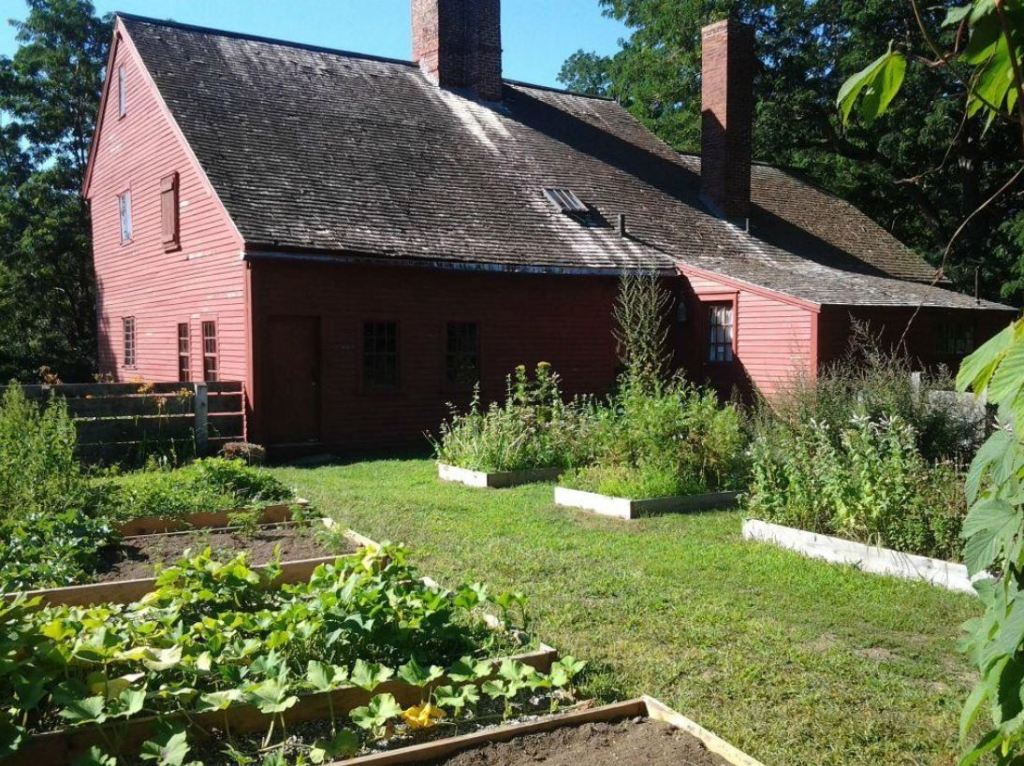
The Rebecca Nurse homestead still stands in Danvers, the new name of Salem Village, and is open to tourists.
Sources
“Salem Witch Trials: American History.” Encyclopedia Britannica.
“The Witchcraft Trial of Rebecca Nurse.” History of Massachusetts blog.
“An Unexpected Turn in the Trials.” The Salem Journal.”
Family Connections Continue
Fifteen years after Rebecca Nurse’s execution and the conviction of Abigail Dane Faulkner, Rebecca’s grandson Samuel Nurse and Abigail’s daughter Dorothy Faulkner were married on 25 November, 1708.
Biographical Sketch of Mary Towne Estey
“Mary Easty Facts
Lewis, Jone Johnson. (2019, August 28). Mary Easty: Hanged as a Witch in Salem, 1692. Retrieved from https://www.thoughtco.com/mary-easty-biography-3530324
Known for: hanged as a witch in the 1692 Salem witch trials
Age at time of Salem witch trials: about 58
Dates: baptized August 24, 1634, died September 22, 1692
Also known as: Mary Towne, Mary Town, Mary Esty, Mary Estey, Mary Eastey, Goody Eastie, Goody Easty, Mary Easte, Marah Easty, Mary Estick, Mary Eastick
Family background: Her father was William Towne and her mother Joanna (Jone or Joan) Blessing Towne, accused once of witchcraft herself. William and Joanna arrived in America around 1640. Among Mary’s siblings were Rebecca Nurse (arrested March 24 and hanged June 19) and Sarah Cloyse (arrested April 4, case dismissed January 1693).
Mary married Isaac Easty, a well-to-do farmer born in England, around 1655 – 1658. They had eleven children, seven alive in 1692. They lived in Topsfield, rather than either Salem Town or Village.
Salem Witch Trials
Rebecca Nurse, Mary Easty’s sister and a well-respected matron, was denounced as a witch by Abigail Williams and arrested on March 24. Their sister, Sarah Cloyce, defended Rebecca, and was ordered arrested on April 4. Sarah was examined on April 11.
A warrant was issued for Mary Easty’s arrest on April 21, and she was taken into custody. The next day, she was examined by John Hathorne and Jonathan Corwin, as were Nehemiah Abbott Jr., William and Deliverance Hobbs, Edward Bishop Jr. and his wife Sarah, Mary Black, Sarah Wildes, and Mary English. During Mary Easty’s examination, Abigail Williams, Mary Walcott, Ann Putnam Jr., and John Indian said that she was hurting them, and that their “mouths were stopt.” Elizabeth Hubbard cried “Goody Easty you are the woman….” Mary Easty maintained her innocence. Rev. Samuel Parris took the notes on the examination.
E: I will say it, if it was my last time, I am clear of this sin.
Of what sin?
E: Of witchcraft.
Despite her assertions of innocence, she was sent to jail.
On May 18, Mary Easty was set free; existing records do not show why. Two days later, Mercy Lewis experienced new afflictions, and she and several other girls claimed to see Mary Easty’s specter; she was charged again and arrested in the middle of the night. Immediately, Mercy Lewis’s fits ceased. More evidence was gathered by deposition and during several days of examination of Mary Easty in late May.
A jury of inquest considered Mary Easty’s case on August 3-4 and heard testimony of many witnesses.
In September, officials gathered witnesses for the trial of Mary Easty among others. On September 9, Mary Easty was pronounced guilty of witchcraft by a trial jury and sentenced to death. Also found guilty that day were Mary Bradbury, Martha Corey, Dorcas Hoar, Alice Parker, and Ann Pudeator.
She and her sister, Sarah Cloyce, petitioned the court together for a “fayre and equall hearing” of evidence for them as well as against them. They argued that they had no opportunity to defend themselves and were not allowed any counsel and that spectral evidence was not dependable. Mary Easty also added a second petition with a plea was focused more on others than herself: “I petition your honors not for my own life, for I know I must die, and my appointed time is set …. if it be possible, that no more blood be shed.”
On September 22, Mary Easty, Martha Corey (whose husband Giles Corey had been pressed to death on September 19), Alice Parker, Mary Parker, Ann Pudeator, Wilmott Redd, Margaret Scott, and Samuel Wardwell were hanged for witchcraft. Rev. Nicholas Noyes officiated at this last execution in the Salem witch trials, saying after the execution, “What a sad thing it is to see eight firebrands of hell hanging there.”
In a quite different spirit, Robert Calef described Mary Easty’s end in his later book, More Wonders of the Invisible World:
Mary Easty, Sister also to Rebecka Nurse, when she took her last farewell of her Husband, Children and Friends, was, as is reported by them present, as Serious, Religious, Distinct, and Affectionate as could well be expressed, drawing Tears from the Eyes of almost all present.
After the Trials
In November, Mary Herrick testified that Mary Easty’s ghost visited her and said that she was innocent.
In 1711, Mary Easty’s family received 20 pounds compensation and Mary Easty’s attainder was reversed. Isaac Easty died on June 11, 1712.”

Biographical Sketch of Sarah Towne Bridges Cloyce
“Known for: accused in the 1692 Salem witch trials; she escaped conviction though two of her sisters were executed.
Age at time of Salem witch trials: 54
Also known as: Sarah Cloyse, Sarah Towne, Sarah Town, Sarah Bridges
Before the Salem Witch Trials
Sarah Towne Cloyce’s father was William Towne and her mother Joanna (Jone or Joan) Blessing Towne (~1595 – June 22, 1675), accused once of witchcraft herself. William and Joanna arrived in America around 1640. Among Sarah’s siblings were two also caught up in the Salem witch hysteria of 1692: Rebecca Nurse (arrested March 24 and hanged June 19) and Mary Easty (arrested April 21, hanged September 22).
Sarah married Edmund Bridges Jr. in England, about 1660. She was a widow with five children when she married Peter Cloyce, father of six; they had three children together. Sarah and Peter Cloyce lived in Salem Village and were members of Salem Village church.
Accused
Sarah’s sister, Rebecca Nurse, 71, was accused of witchcraft by Abigail Williams on March 19, 1692. She was visited by a local delegation on March 21 and arrested the next day. Magistrates John Hathorne and Jonathan Corwin examined Rebecca Nurse on March 24.
March 27: Easter Sunday, which was not a special Sunday in the Puritan churches, saw Rev. Samuel Parris preaching on “dreadful witchcraft broke out here.” He emphasized that the devil could not take the form of anyone innocent. Tituba, Sarah Osborne, Sarah Good, Rebecca Nurse and Martha Corey were in prison. During the sermon, Sarah Cloyce, likely thinking of her sister Rebecca Nurse, left the meetinghouse and slammed the door.
On April 3, Sarah Cloyce defended her sister Rebecca against charges of witchcraft — and found herself accused the next day.
Arrested and Examined
On April 8, Sarah Cloyce and Elizabeth Proctor were named in warrants and arrested. On April 10, the Sunday meeting at Salem Village was interrupted with incidents identified as caused by the specter of Sarah Cloyce.
On April 11, Sarah Cloyce and Elizabeth Proctor were examined by magistrates John Hathorne and Jonathan Corwin. Also present were Deputy Governor Thomas Danforth, Isaac Addington (secretary of Massachusetts), Major Samuel Appleton, James Russell, and Samuel Sewall, as was the Rev. Nicholas Noyes, who gave the prayer. Rev. Samuel Parris took notes. Sarah Cloyce was accused in testimony by John Indian, Mary Walcott, Abigail Williams, and Benjamin Gould. She shouted out that John Indian was a “grievous liar” and refused to confess.
Among those who accused Sarah Cloyce was Mercy Lewis, whose paternal aunt Susanna Cloyce was Sarah’s sister-in-law. Mercy Lewis took a less active role in accusing Sarah Cloyce than she did in accusing others including Sarah’s sister Rebecca Nurse.
That very night of April 11, Sarah Cloyce was transferred to Boston prison, along with her sister Rebecca Nurse, Martha Corey, Dorcas Good, and John and Elizabeth Proctor. Even after her jailing, John Indian, Mary Walcott, and Abigail Williams claimed to be tormented by Sarah Cloyce.”Petitions
Lewis, Jone Johnson. (2018, December 6). Sarah Cloyce: Accused in the Salem Witch Trials. Retrieved from https://www.thoughtco.com/sarah-cloyce-biography-3530328
“Sarah Cloyce and Mary Easty petitioned the court for a “fayre and equall hearing” of evidence for them as well as against them. They argued that they had no opportunity to defend themselves and were not allowed any counsel and that spectral evidence was not dependable. Mary Easty also added a second petition with a plea was focused more on others than herself: “I petition your honors not for my own life, for I know I must die, and my appointed time is set …. if it be possible, that no more blood be shed.”
But Mary’s plea was not in time… September 22. Rev. Nicholas Noyes officiated at this last execution in the Salem witch trials, saying after the execution, “What a sad thing it is to see eight firebrands of hell hanging there.”
In December, a brother of Sarah Cloyce helped pay the bond to release William Hobbs from jail.
Charges Finally Dismissed
Charges against Sarah Cloyce were dismissed by a grand jury on January 3, 1693. Despite the charges being dropped, as was the custom, her husband Peter had to pay the prison for her fees before she could be released from imprisonment.
After the Trials
Sarah and Peter Cloyce moved after her release, first to Marlborough and then to Sudbury, both in Massachusetts.
In 1706, when Ann Putman Jr. publicly confessed in church her contrition for her part in the accusations (saying that Satan had put her up to it), she pointed to the three Towne sisters:
“And particularly, as I was a chief instrument of accusing of Goodwife Nurse and her two sisters [including Sarah Cloyce], I desire to lie in the dust, and to be humbled for it, in that I was a cause, with others, of so sad a calamity to them and their families….”
In 1711, an act of the legislature reversed the attainders on many who had been convicted, but since Sarah Cloyce’s case was eventually dismissed, she was not included in that act.
Sarah Cloyce in Fiction
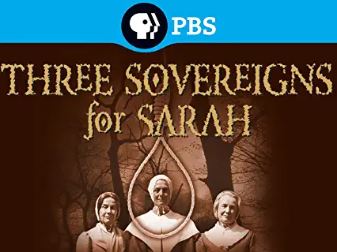
Sarah Cloyce was the key character in the 1985 American Playhouse dramatization of her story in “Three Sovereigns for Sarah,” starring Vanessa Redgrave as Sarah Cloyce in 1702, seeking justice for herself and her sisters.
The television series based on Salem did not include Sarah Cloyce as a character.”
Primary Source Documents
The best source is the Salem Witch Trials: Documentary Archive and Transcription Project
“SWP No. 094: Rebecca Nurse Executed, July 19, 1692.” SWP No. 094: Rebecca Nurse Executed, July 19, 1692 – New Salem – Pelican, University of Virginia, 2018, salem.lib.virginia.edu/n98.html.
“ SWP No. 045: Mary Esty Executed , September 22, 1692.” SWP No. 045: Mary Esty Executed , September 22, 1692. – New Salem – Pelican, University of Virginia, 2018, salem.lib.virginia.edu/n45.html.
“ SWP No. 033: Sarah Cloyce.” SWP No. 033: Sarah Cloyce – New Salem – Pelican, University of Virginia, 2018, salem.lib.virginia.edu/n33.html.
 24 and More