A Turn in the Road, in Early Andover, Massachusetts
Why were the greatest number of witchcraft accusations made in Andover?
The witch trials began in Salem and soon spread to other settlements, but the greatest number of accusations by far occurred in Andover. There are many theories about this and most focus on the North Andover parish’s assistant minister, Reverend Thomas Barnard.
Barnard was educated at Harvard. Founded in 1636 (only eight years after Edmund and Annis Ingalls emigrated to the Massachusetts Bay Colony), Harvard was established primarily as a seminary dedicated to educating the Colony’s future religious leaders. The fact that Barnard was a graduate of Harvard’s Divinity School rather than a school in England made him especially attractive as an assistant for aging Reverend Francis Dane.
Barnard was also a protege of Cotton Mather, a well educated and devout Puritan who was greatly revered by people in Salem as well as surrounding communities. Mather firmly believed in the existence of the “invisible world,” a world of spirits existing in tandem with the physical world. He believed that spirits of the invisible world could be well-meaning, but could also very well be demons, servants of Satan. These evil spirits would be about the business of converting Christians to the service of Satan.
Mather wanted to prove that the existence of witches was widespread and therefore a great danger to faithful Puritans. In fact, he was working at the time of the trials on his book, The Wonders of the Invisible World , which would convince Puritans of the existence of evil in the world. He also wrote letters to clergymen in the area warning them of signs of witchcraft. As Mather’s protege, Barnard was also convinced that a great threat to his parishioners was witchcraft.
For this reason, Barnard did the following:
encouraged Joseph Ballard to bring two “afflicted” girls from Salem to Andover to identify the person(s) who bewitched Ballard’s wife Elizabeth. In doing this, Barnard was instrumental in bringing Salem’s hysteria to Andover.
organized the “touch test” in Andover. He offered prayers on the occasion and oversaw more than 30 people accused of witchcraft as a result of this test.
preached a sermon stressing repentance as the path back to God. He stressed that repentance involved a detailed public confession of involvement with the devil and other witches. Such detail would convince the community of “saints” and God of sincere repentance.
Most of the accused in Salem did not plead guilty, but rather insisted upon their innocence. The accused in Andover followed Reverend Barnard counsel, admitted guilt and begged forgiveness. They named names of others by way of proving the sincerity of their repentance. People in Andover believed that by confessing and repenting, they might be pardoned by the judges, too.
Reverend Dane spearheaded the community’s opposition to the charges, trials, and convictions of so many Andover citizens. While Dane’s objections were based upon his doubt that the cause of much injury was witchcraft, Cotton Mather and Thomas Barnard eventually grew uneasy about the use of spectral evidence only in identifying witches. The opposition, based upon doubt of touch tests and spectral evidence, grew to such extent in Andover that Reverend Barnard joined in signing and then later authoring his own petitions to end the trials. Perhaps the evolution of his belief about such things as touch test and spectral evidence was genuine, but also likely is Barnard’s recognition that his future as the religious leader of Andover depended upon understanding the direction of political winds.
Reverend Thomas Barnard’s House in North Andover
Sources:
Hite, R. (2018). In the Shadow of Salem: The Andover Witch Hunt of 1692. Robinson, E. A. (2017). Genealogy of Andover Witch Families. Goose Pond. Robinson, E. A. (2017). Witches in Salem, but Why in Andover. Goose Pond.
Ingalls Family Connection: Close family relationship: Elizabeth Ingalls (Henry, Sr.’s sister)
Biographical Sketch of Rev. Francis Dane and His Contribution to Halting the Trials
“Decidedly against the concept of witchcraft, the Reverend himself was accused of being a witch during the Salem Village hysteria of 1692; but, was never charged.
He was baptized in Bishop’s Stortford, England on November 20, 1615, and was probably born there. When he grew up, he attended King’s College at the University of Cambridge, England, graduating in 1633. He and his parents, John Dane and Frances Bowyer Dane, immigrated to Massachusetts in 1633 first settling in Ipswich and Roxbury.
Somewhere along the line, Francis married Elizabeth Ingalls, and the couple would have two sons and four daughters. In 1649, he became the second pastor of the North Parish Church in Andover, Massachusetts and founded its first school.
His views on witchcraft were well known, having come down against the concept in 1658 when John Godfrey of was accused of witchcraft, more than 30 years before the infamous witch trials of Salem. Godfrey was charged with injuring the wife of Job Tyler by “Satanic acts.” The Reverend Francis Dane testified on Godfrey’s behalf, judging against the probability of witchcraft and Godfrey was freed of all charges.
There is no record of discord between the Reverend Dane and his congregation in the first three decades of his service and Dane was a highly respected and powerful member of the Andover community. Unfortunately, Dane’s wife Elizabeth died in 1676 and a year later he married Mary Thomas. Things began to change for Dane in 1680 when he was 65 years-old. At that time, church members began to complain about his capabilities and requested a younger, more vibrant minister for their church.
In January 1682, the congregation hired the young Reverend Thomas Barnard, who was a recent graduate of Harvard and protege of Cotton Mather. A short time later, the congregation stopped paying Dane’s salary and gave Barnard a full salary. However, Dane petitioned the General Court in Boston, and the Andover Church was required to split the annual salary between the two pastors who would share the duties. The town complied but split the £80 annual salary unevenly. The split would pay Dane £30 per year, and Barnard £50, with the stipulation that when Dane retired or died, Barnard would receive the full annual salary. Neither man was pleased with the solution.
Though there were no major politics in the church over the next decade, there was tension between the two pastors. In 1689, Reverend Dane lost his second wife, and the following year, married for the third and final time to Hannah [Chandler] Abbot. When the Salem witch trials began in 1692, Dane was 76 years-old and had lived in Andover for 44 years. What earlier had been tension between the two pastors would become an all-out conflict when the Reverend Thomas Barnard invited two of the Salem Village accusers to attend prayer meetings in the church that included “touch tests,” to find practitioners of witchcraft.
While Barnard was instrumental in spreading the witchcraft hysteria, the Reverend Dane refused to take part in the witch hunt from the outset and would later begin a petition to the governor and to the General Court, condemning the witch trials and requesting that they end.
This split between the two pastors was picked up by the community, and before it was over, more members of Dane’s family were accused than any other single family during the witch hysteria. In addition to members of Dane’s extended family, two of his daughters, Elizabeth Dane Johnson and Abigail Dane Faulkner, and his daughter-in-law, Deliverance Haseltine Dane, were all arrested. Five of his grandchildren were also accused. The reverend himself was also accused, but, never charged.
The Reverend Dane was the driving force behind ending the trials in Andover. He first arranged for the Andover children to be let out of jail on bond in October 1692. Husbands, brothers, and fathers of the accused witches then joined Dane in petitioning the General Court for the release of the Andover women on the grounds that they were needed at home and with the coming of winter would not fare well in the prisons.
On October 18, 1692, he wrote a petition addressing what he believed to be the forced and false confessions of guilt made by women during the frenzy of the “touch tests,” in order to save themselves from trial and possible execution. In the petition, he wrote that there was “reason to think that the extreme urgency that was used with some of them by their friends and others who privately examined them, and the fear they were then under, hath been an inducement to them to admit such things.”
This was but his first attempt to explain the confessions of those who had been accused and to condemn the use of spectral evidence. Several more petitions would be sent as well as letters to the courts and his fellow ministers condemning the procedures, stating: “I believe the reports have been scandalous and unjust, neither will bear y light.” Slander charges filed by Dane and members of his family, particularly Abigail Dane Faulkner, also aided in deterring the resurgence of accusations in Andover as well.
The Reverend Dane remained in Andover until his death on February 17, 1697. He is buried at the Old North Parish Burying Ground, in North Andover. Unfortunately, his grave is unmarked.”
Category: Accused, Brought to Trial, Convicted, Executed
Ingalls Family Connection: Close family relationship: Faith Ingalls (Henry, Sr.’s sister)
Martha Allen Carrier was the only one of Faith Ingalls’ children to be executed, but she was not the only one accused, examined, imprisoned, and tried. More about the other daughter later on this blog.
Biographical Sketch of Martha Ingalls Allen Carrier from a Descendants’ Point of View
“August 5, 1692 five residents of Andover, Massachusetts were led to the gallows and, in front of a large crowd of witnesses, hung atop Gallows Hill in Salem for practicing witchcraft. The frenzy behind the Salem witch trials was based on the testimony of three young girls: Abigail Williams, Elizabeth Hubbard, and Susan Sheldon, and reinforced by townspeople who used the accused as scapegoats for their own misfortunes and to escape persecution. Four of the condemned were men, including John Proctor, the main character in Arthur Miller’s play “The Crucible.” The lone woman was an Andover housewife named Martha Carrier. It is Martha, my 8th great-grandmother, I’d like to honor today.
She was born Martha Ingalls Allen in 1643 to Andrew Allen and Faith Ingalls, two of the original 23 settlers of Andover, Massachusetts. In 1674, she became pregnant with the child of an older Welsh servant, Thomas Carrier, who she married. The newlyweds relocated to Billerica. In 1676, they were blamed for a smallpox epidemic that claimed the lives of thirteen people including two of the Carrier children, Martha’s father and two brothers, her sister-in-law, and a nephew. A group of selectmen ordered the family to leave town immediately or pay a surety of 20 shillings per week if they wanted to stay. The Carriers were barred from entering public places. Although Martha, Thomas and the other children were afflicted with the disease, they survived. This was later was used as evidence of Martha’s “special powers.”
Thomas’ past is somewhat sketchy. According to Carrier family stories, Thomas’s exceptional physical size (he was said to be over 7 feet tall) strength, and fleetness of foot, led him to be chosen as one of the King of England’s Royal Guard. In 1649, when Charles I was put on trail and sentenced to death, it was Thomas who acted in the historic position as executioner. [Also, Thomas Morgan, alias Carrier, signed the execution orders for Charles I. His signature at that time was “Morgan” but sloppily written as “Worgan.” That was the name he used when he joined Oliver Cromwell’s Parliament army. He, according to sources on this, used the name Carrier to throw pursuers off when they followed Charles II ‘s command to find and execute all who played a role in the execution of his father, Charles I.] Unfortunately for Carrier, Charles’s son Charles II would re-take the throne and gain control the country. In May 1660, Charles II ordered the arrest of those responsible for his father’s death. Carrier adopted the surname “Morgan” and escaped to America around 1665. [The opposite is probably the case, as noted in the bracketed comment above.] It seems that Carrier lived an unsettled life at first, moving three or four times between Billerica and Andover. Although the Puritans of the Massachusetts Bay Colony did not approve of Charles I, they also did not approve of regicide. The facts behind Carrier’s actions may have found their way to the new colony and played a part in Martha’s undoing.
To make matters worse, Martha took charge of her father’s estate. [Martha Carrier probably had her name on the deed because she feared pursuers of her husband might find him through legal documents. This would have appeared to others as overstepping the bounds of a woman’‘s role] She immediately ran into friction with her neighbors, threatening vengeance upon those she believed were cheating her or her husband. She was described by Magistrate Cotton Mather as “a woman of a disposition not unlikely to make enemies; plain and outspoken in her speech, of remarkable strength of mind, a keen sense of justice, and a sharp tongue.”
In an excerpt from “Historical Sketches of Andover” the author notes that most of the accused confessed and thus averted the extreme penalty of death. Only Martha did not, at some time, make an admission or confession. “From the first moment to the last, under all the persuasions and exhortations of friends, under denunciations and threats of the magistrates and examiners, she held firm, denying all charges, and neither overborne in mind nor shaken in nerve, met death with heroic courage.” Martha’s three eldest children: Richard, Andrew, and Thomas were accused of witchcraft with their mother and tortured until they confessed. Their seven-year-old sister Sarah was not accused, but afraid and prompted by the interrogators, made to testify against her mother in court.
Several women accused confessed that Martha had led them to practice. Ann Foster said she rode on a stick with Martha to Salem Village, that the stick broke and that she saved herself by clinging around Martha’s neck. Her nephew, Allen Toothaker testified that he lost two of his livestock, attributing their deaths to Martha. Samuel Preston blamed the death of one of his cows on Martha stating that they’d had a disagreement and she’d placed a hex on the animal.
On August 19, 1692, Martha and four men were carried through the streets of Salem in a cart, the crowds thronging to see the sight. Even from the scaffold, Martha Carrier’s voice was heard asserting her innocence. Her body was dragged to a common grave between the rocks about two feet deep where she joined the bodies of Reverend Burroughs and John Willard.
On October 17, 1710, the Massachusetts General Court passed an act that “the several convictions, judgments, and attainders be, and hereby are, reversed, and declared to be null and void.” They ought to have extended the act to all who had suffered, rather confined its effect to those in reference to whom petitions had been presented. On the 17th of December 1711, Governor Dudley issued his warrant for the purpose of carrying out a vote of the General Assembly stating “by and with the advice and consent of Her Majesty’s Council, (to pay) the sum of 578 pounds to such persons as are living, and to those that legally represent them that are dead.” Martha Carrier’s family was awarded 7 pounds, 6 shillings.
On Tuesday, March 16, 1999, the Board of Selectmen from the town of Billerica, Massachusetts voted to rescind the banishment of the entire Carrier family as an “appropriate gesture” to the Carrier family. It was unanimously approved.
In October of 1995, I booked a two week’s vacation just south of Bar Harbor, Maine in a little fishing village overlooking an inlet. I’d hoped to visit all of the lighthouses along the coast and then rather play the rest of the vacation by ear. After the first week’s sampling of fresh fish and realizing that most of the lighthouses were off coast, decommissioned, or simply lighted totems and not reachable by car, I rambled south along the coast toward interstate 95 and home. It wasn’t a planned detour. Passing through Danvers, Massachusetts enroute to interstate 90, I noticed the signs for Salem. And took the exit.
Early in October, the town had already started preparing for Halloween celebrations. Banners flying from poles and windows accented by the golden red leaves painted a watercolor backdrop against the wrought iron fencing and granite stones in the memorial graveyard. Following the curve of the rough-carved letters with my fingers, I read “Martha Carrier, Hanged, August 19, 1692.” Grandmother.”
Biographical Sketch of Martha Ingalls Allen Carrier
“Martha Carrier (born Martha Allen; died August 19, 1692) was one of 19 people accused of witchcraft who were hanged during the 17th century Salem witch trials. Another person died of torture, and four died in prison, although the trials lasted only from spring to September of 1692. The trials began when a group of girls in Salem Village (now Danvers), Massachusetts, claimed to be possessed by the devil and accused several local women of being witches. As hysteria spread throughout colonial Massachusetts, a special court was convened in Salem to hear the cases.
Fast Facts: Martha Carrier Known For: Conviction and execution as a witch Born: Date unknown in Andover, Massachusetts Died: Aug. 19, 1692 in Salem, Massachusetts Spouse: Thomas Carrier Children: Andrew Carrier, Richard Carrier, Sarah Carrier, Thomas Carrier Jr., possibly others
Early Life Carrier was born in Andover, Massachusetts, to parents who were among the original settlers there. She married Thomas Carrier, a Welsh indentured servant, in 1674, after giving birth to their first child, a scandal that wasn’t forgotten. [Other sources have Martha seven months pregnant at the time she married Thomas Carrier – still a scandal to be remembered] They had several children—sources give numbers ranging from four to eight—and lived for a time in Billerica, Massachusetts, moving back to Andover to live with her mother after her father’s death in 1690.
The Carriers were accused of bringing smallpox to Andover; two of their children had died of the disease in Billerica. That Carrier’s husband and two other children were ill with smallpox and survived was considered suspect—especially because Carrier’s two brothers had died of the disease, which put her in line to inherit her father’s property. She was known as a strong-minded, sharp-tongued woman, and she argued with her neighbors when she suspected them of trying to cheat her and her husband.
Witch Trials Belief in the supernatural—specifically, in the devil’s ability to give humans the power to harm others through witchcraft in return for their loyalty to him—had emerged in Europe as early as the 14th century and was widespread in colonial New England. Coupled with the smallpox epidemic, the aftermath of a British-French war in the colonies, fears of attacks from nearby Native American tribes, and a rivalry between rural Salem Village and the more affluent Salem Town (now Salem), the witch hysteria had created suspicions among neighbors and a fear of outsiders. Salem Village and Salem Town were near Andover.
The first convicted witch, Bridget Bishop, was hanged that June. Carrier was arrested on May 28, along with her sister and brother-in-law, Mary and Roger Toothaker, their daughter Margaret (born 1683), and several others. They all were charged with witchcraft. Carrier, the first Andover resident caught up in the trials, was accused by the four “Salem girls,” as they were called, one of whom worked for a competitor of Toothaker.
Beginning the previous January, two young Salem Village girls had begun having fits that included violent contortions and uncontrolled screaming. A study published in Science magazine in 1976 said the fungus ergot, found in rye, wheat, and other cereals, can cause delusions, vomiting, and muscle spasms, and rye had become the staple crop in Salem Village due to problems with cultivating wheat. But a local doctor diagnosed bewitchment. Other young local girls soon began to exhibit symptoms similar to those of the Salem Village children.
On May 31, Judges John Hathorne, Jonathan Corwin, and Bartholomew Gedney examined Carrier, John Alden, Wilmott Redd, Elizabeth How, and Phillip English. Carrier maintained her innocence, though the accusing girls—Susannah Sheldon, Mary Walcott, Elizabeth Hubbard, and Ann Putnam—demonstrated their supposed afflictions caused by Carrier’s “powers.” Other neighbors and relatives testified about curses. She pleaded not guilty and accused the girls of lying.
Carrier’s youngest children were coerced into testifying against their mother, and her sons Andrew (18) and Richard (15) were also accused, as was her daughter Sarah (7). Sarah confessed first, after which her son Thomas Jr. did as well. Then, under torture (their necks tied to their heels), Andrew and Richard also confessed, all implicating their mother. In July, Ann Foster, another woman accused in the trials, also implicated Martha Carrier, a pattern of the accused naming other people that was repeated again and again.
Found Guilty On August 2, the court heard testimony against Carrier, George Jacobs Sr., George Burroughs, John Willard, and John and Elizabeth Proctor. On August 5, a trial jury found all six guilty of witchcraft and sentenced them to hang.
Carrier was 33 years old when she was hanged on Salem’s Gallows Hill on August 19, 1692, with Jacobs, Burroughs, Willard, and John Proctor. Elizabeth Proctor was spared and later freed. Carrier shouted her innocence from the scaffold, refusing to confess to “a falsehood so filthy” even though it would have helped her avoid hanging. Cotton Mather, a Puritan minister and author at the center of the witch trials, was an observer at the hanging, and in his diary he noted Carrier as a “rampant hag” and possible “Queen of Hell.”
Historians have theorized that Carrier was victimized because of a fight between two local ministers over disputed property or because of the selective smallpox effects in her family and community. Most agree, however, that her reputation as a “disagreeable” member of the community could have contributed.
Legacy In addition to those who died, about 150 men, women, and children were accused. But by September 1692, the hysteria had begun to abate. Public opinion turned against the trials. The Massachusetts General Court eventually annulled verdicts against the accused witches and granted indemnities to their families. In 1711, Carrier’s family received 7 pounds and 6 shillings as recompense for her conviction. But bitterness lingered inside and outside the communities.
The vivid and painful legacy of the Salem witch trials has endured for centuries as a horrific example of false witness. Noted playwright Arthur Miller dramatized the events of 1692 in his 1953 Tony Award-winning play “The Crucible,” using the trials as an allegory for the anti-Communist “witch hunts” led by Sen. Joseph McCarthy in the 1950s. Miller himself was caught up in McCarthy’s net, likely because of his play.
Category: Accused, Brought to Trial, Convicted, Executed : Rebecca Towne Nurse, Mary Town Esty
Category: Accused, Indicted, Charges Dismissed : Sarah Towne Bridges Cloyce
Ingalls Family Connection: Very extended relationship through marriage: Elizabeth Ingalls (Henry, Sr.’s sister)
Biographical Sketch of Rebecca Towne Nurse
“Rebecca Nurse (February 21, 1621–July 19, 1692) was a victim of the notorious Salem witch trials, hanged as a witch at 71 years of age. Despite being a fervent churchgoer and an upstanding member of the community—a newspaper of the day referred to her as “saint-like” and “a perfect example of good Puritan behavior”—she was accused, tried, and convicted of witchcraft and put to death without the legal protections Americans would come to enjoy.
Fast Facts: Rebecca Nurse Known For: Hanged during the 1692 Salem witch trials Also Known As: Rebecca Towne, Rebecca Town, Rebecca Nourse, Rebecka Nurse. Goody Nurse,Rebeca Nurce Born: February 21, 1621 in Yarmouth, England Parents: William Towne, Joanna Blessing Died: July 19, 1692 in Salem Village, Massachusetts Bay Colony Spouse: Francis Nurse Children: Rebecca, Sarah, John, Samuel, Mary, Elizabeth, Francis, Benjamin (and sometimes Michael) Early Life Rebecca Nurse was born on Feb. 21, 1621 (some sources give this as her baptism date), in Yarmouth, England, to William Towne and Joanna Blessing. Her entire family, including several siblings, immigrated to the Massachusetts Bay Colony sometime between 1638 and 1640.
Rebecca married Francis Nurse, who also came from Yarmouth, around 1644. They raised four sons and four daughters on a farm in Salem Village, now Danvers, Massachusetts, 10 miles inland from the bustling port community of Salem Town, now Salem. All but one of their children were married by 1692. Nurse, a member of Salem Church, was known for her piety but also for occasionally losing her temper.
She and the Putnam family had fought in court several times over land. During the witch trials, many of the accused had been enemies of the Putnams, and Putnam family members and in-laws were the accusers in many cases.
Trials Begin Public accusations of witchcraft in Salem Village began on Feb. 29, 1692. The first accusations were leveled against three women who weren’t considered respectable: Tituba, an Indian slave; Sarah Good, a homeless mother; and Sarah Osborne, who had a somewhat scandalous history.
Then on March 12, Martha Corey was accused; Nurse followed on March 19. Both women were church members and respected, prominent members of the community.
Arrested A warrant issued on March 23 for Nurse’s arrest included complaints of attacks on Ann Putnam Sr., Ann Putnam Jr., Abigail Williams, and others. Nurse was arrested and examined the next day. She was accused by townspeople Mary Walcott, Mercy Lewis, and Elizabeth Hubbard as well as by Ann Putnam Sr., who “cried out” during the proceedings to accuse Nurse of trying to get her to “tempt God and dye.” Several spectators adopted head motions indicating that they were in Nurse’s thrall. Nurse was then indicted for witchcraft.
On April 3, Nurse’s younger sister, Sarah Cloyce (or Cloyse), came to Nurse’s defense. She was accused and arrested on April 8. On April 21, another sister, Mary Easty (or Eastey), was arrested after defending their innocence.
On May 25, judges John Hathorne and Jonathan Corwin ordered the Boston jail to take custody of Nurse, Corey, Dorcas Good (Sarah’s daughter, age 4), Cloyce, and John and Elizabeth Parker for acts of witchcraft committed against Williams, Hubbard, Ann Putnam Jr., and others.
Testimony A deposition written by Thomas Putnam, signed on May 31, detailed accusations of torment of his wife, Ann Putnam Sr., by Nurse’s and Corey’s “specters,” or spirits, on March 18 and 19. Another deposition detailed accusations of afflictions on March 21 and 23 caused by Nurse’s specter.
On June 1, townsperson Mary Warren testified that George Burroughs, Nurse, Elizabeth Proctor, and several others said they were going to a feast and that when she refused to eat bread and wine with them, they “dreadfully afflicted her” and that Nurse “appeared in the room” during the taking of the deposition.
On June 2, Nurse, Bridget Bishop, Proctor, Alice Parker, Susannah Martin, and Sarah Good were forced to undergo physical examinations by a doctor with a number of women present. A “preternathurall Excresence of flesh” was reported on the first three. Nine women signed the document attesting to the exam. A second exam later that day stated that several of the observed physical abnormalities had changed; they attested that on Nurse, the “Excresence … appears only as a dry skin without sense” at this later exam. Again, nine women signed the document.
Indicted The next day, a grand jury indicted Nurse and John Willard for witchcraft. A petition from 39 neighbors was presented on Nurse’s behalf, and several neighbors and relatives testified for her.
Witnesses testified for and against Nurse on June 29 and 30. The jury found Nurse not guilty but returned guilty verdicts for Good, Elizabeth How, Martin, and Sarah Wildes. The accusers and spectators protested loudly when the verdict was announced. The court asked the jury to reconsider the verdict; they found her guilty after reviewing the evidence and discovering that she had failed to answer one question put to her (perhaps because she was nearly deaf).
She was condemned to hang. Massachusetts Gov. William Phips issued a reprieve, which was also met with protests and rescinded. Nurse filed a petition protesting the verdict, pointing out she was “hard of hearing and full of grief.”
On July 3, the Salem Church excommunicated Nurse.
Hanged On July 12, Judge William Stoughton signed death warrants for Nurse, Good, Martin, How, and Wildes. All five were hanged on July 19 on Gallows Hill. Good cursed the presiding clergyman, Nicholas Noyes, from the gallows, saying “if you take away my life God will give you blood to drink.” (Years later, Noyes died of a brain hemorrhage; legend has it that he choked on his blood.) That night, Nurse’s family removed her body and buried it secretly on their family farm.
Of Nurse’s two sisters who also were charged with witchcraft, Easty was hanged on Sept. 22 and Cloyce’s case was dismissed in January 1693.
Pardons and Apology In May 1693, Phips pardoned the remaining defendants accused of witchcraft. Francis Nurse died on Nov. 22, 1695, two years after the trials had ended. That was before Nurse and 21 others of the 33 who had been convicted were exonerated in 1711 by the state, which paid compensation to the families of the victims. In 1957, Massachusetts formally apologized for the trials, but It wasn’t until 2001 that the last 11 of those convicted were fully exonerated.
On Aug. 25, 1706, Ann Putnam Jr. publicly apologized “for the accusing of several persons of a grievous crime, whereby their lives were taken away from them, whom, now I have just grounds and good reason to believe they were innocent persons…” She named Nurse specifically. In 1712, Salem Church reversed Nurse’s excommunication.
Legacy The abuses of the Salem witch trials contributed to changes in U.S. court procedures, including the guarantee of the right to legal representation, the right to cross-examine one’s accuser, and the presumption of innocence instead of guilt.
The trials as a metaphor for the persecution of minority groups remained powerful images into the 20th and 21st centuries, particularly in playwright Arthur Miller’s “The Crucible”(1953), in which he used events and individuals from 1692 allegorically for the anti-communist hearings led by Sen. Joseph McCarthy during the Red Scare of the 1950s.
The Rebecca Nurse homestead still stands in Danvers, the new name of Salem Village, and is open to tourists.
Sources “Salem Witch Trials: American History.” Encyclopedia Britannica. “The Witchcraft Trial of Rebecca Nurse.” History of Massachusetts blog. “An Unexpected Turn in the Trials.” The Salem Journal.”
Fifteen years after Rebecca Nurse’s execution and the conviction of Abigail Dane Faulkner, Rebecca’s grandson Samuel Nurse and Abigail’s daughter Dorothy Faulkner were married on 25 November, 1708.
Rebecca Nurse Homestead
Biographical Sketch of Mary Towne Estey
“Mary Easty Facts Known for: hanged as a witch in the 1692 Salem witch trials Age at time of Salem witch trials: about 58 Dates: baptized August 24, 1634, died September 22, 1692 Also known as: Mary Towne, Mary Town, Mary Esty, Mary Estey, Mary Eastey, Goody Eastie, Goody Easty, Mary Easte, Marah Easty, Mary Estick, Mary Eastick
Family background: Her father was William Towne and her mother Joanna (Jone or Joan) Blessing Towne, accused once of witchcraft herself. William and Joanna arrived in America around 1640. Among Mary’s siblings were Rebecca Nurse (arrested March 24 and hanged June 19) and Sarah Cloyse (arrested April 4, case dismissed January 1693).
Mary married Isaac Easty, a well-to-do farmer born in England, around 1655 – 1658. They had eleven children, seven alive in 1692. They lived in Topsfield, rather than either Salem Town or Village.
Salem Witch Trials Rebecca Nurse, Mary Easty’s sister and a well-respected matron, was denounced as a witch by Abigail Williams and arrested on March 24. Their sister, Sarah Cloyce, defended Rebecca, and was ordered arrested on April 4. Sarah was examined on April 11.
A warrant was issued for Mary Easty’s arrest on April 21, and she was taken into custody. The next day, she was examined by John Hathorne and Jonathan Corwin, as were Nehemiah Abbott Jr., William and Deliverance Hobbs, Edward Bishop Jr. and his wife Sarah, Mary Black, Sarah Wildes, and Mary English. During Mary Easty’s examination, Abigail Williams, Mary Walcott, Ann Putnam Jr., and John Indian said that she was hurting them, and that their “mouths were stopt.” Elizabeth Hubbard cried “Goody Easty you are the woman….” Mary Easty maintained her innocence. Rev. Samuel Parris took the notes on the examination.
E: I will say it, if it was my last time, I am clear of this sin. Of what sin? E: Of witchcraft.
Despite her assertions of innocence, she was sent to jail.
On May 18, Mary Easty was set free; existing records do not show why. Two days later, Mercy Lewis experienced new afflictions, and she and several other girls claimed to see Mary Easty’s specter; she was charged again and arrested in the middle of the night. Immediately, Mercy Lewis’s fits ceased. More evidence was gathered by deposition and during several days of examination of Mary Easty in late May.
A jury of inquest considered Mary Easty’s case on August 3-4 and heard testimony of many witnesses.
In September, officials gathered witnesses for the trial of Mary Easty among others. On September 9, Mary Easty was pronounced guilty of witchcraft by a trial jury and sentenced to death. Also found guilty that day were Mary Bradbury, Martha Corey, Dorcas Hoar, Alice Parker, and Ann Pudeator.
She and her sister, Sarah Cloyce, petitioned the court together for a “fayre and equall hearing” of evidence for them as well as against them. They argued that they had no opportunity to defend themselves and were not allowed any counsel and that spectral evidence was not dependable. Mary Easty also added a second petition with a plea was focused more on others than herself: “I petition your honors not for my own life, for I know I must die, and my appointed time is set …. if it be possible, that no more blood be shed.”
On September 22, Mary Easty, Martha Corey (whose husband Giles Corey had been pressed to death on September 19), Alice Parker, Mary Parker, Ann Pudeator, Wilmott Redd, Margaret Scott, and Samuel Wardwell were hanged for witchcraft. Rev. Nicholas Noyes officiated at this last execution in the Salem witch trials, saying after the execution, “What a sad thing it is to see eight firebrands of hell hanging there.”
In a quite different spirit, Robert Calef described Mary Easty’s end in his later book, More Wonders of the Invisible World:
Mary Easty, Sister also to Rebecka Nurse, when she took her last farewell of her Husband, Children and Friends, was, as is reported by them present, as Serious, Religious, Distinct, and Affectionate as could well be expressed, drawing Tears from the Eyes of almost all present.
After the Trials In November, Mary Herrick testified that Mary Easty’s ghost visited her and said that she was innocent.
In 1711, Mary Easty’s family received 20 pounds compensation and Mary Easty’s attainder was reversed. Isaac Easty died on June 11, 1712.”
“Known for: accused in the 1692 Salem witch trials; she escaped conviction though two of her sisters were executed.
Age at time of Salem witch trials: 54 Also known as: Sarah Cloyse, Sarah Towne, Sarah Town, Sarah Bridges
Before the Salem Witch Trials Sarah Towne Cloyce’s father was William Towne and her mother Joanna (Jone or Joan) Blessing Towne (~1595 – June 22, 1675), accused once of witchcraft herself. William and Joanna arrived in America around 1640. Among Sarah’s siblings were two also caught up in the Salem witch hysteria of 1692: Rebecca Nurse (arrested March 24 and hanged June 19) and Mary Easty (arrested April 21, hanged September 22).
Sarah married Edmund Bridges Jr. in England, about 1660. She was a widow with five children when she married Peter Cloyce, father of six; they had three children together. Sarah and Peter Cloyce lived in Salem Village and were members of Salem Village church.
Accused Sarah’s sister, Rebecca Nurse, 71, was accused of witchcraft by Abigail Williams on March 19, 1692. She was visited by a local delegation on March 21 and arrested the next day. Magistrates John Hathorne and Jonathan Corwin examined Rebecca Nurse on March 24.
March 27: Easter Sunday, which was not a special Sunday in the Puritan churches, saw Rev. Samuel Parris preaching on “dreadful witchcraft broke out here.” He emphasized that the devil could not take the form of anyone innocent. Tituba, Sarah Osborne, Sarah Good, Rebecca Nurse and Martha Corey were in prison. During the sermon, Sarah Cloyce, likely thinking of her sister Rebecca Nurse, left the meetinghouse and slammed the door.
On April 3, Sarah Cloyce defended her sister Rebecca against charges of witchcraft — and found herself accused the next day.
Arrested and Examined On April 8, Sarah Cloyce and Elizabeth Proctor were named in warrants and arrested. On April 10, the Sunday meeting at Salem Village was interrupted with incidents identified as caused by the specter of Sarah Cloyce.
On April 11, Sarah Cloyce and Elizabeth Proctor were examined by magistrates John Hathorne and Jonathan Corwin. Also present were Deputy Governor Thomas Danforth, Isaac Addington (secretary of Massachusetts), Major Samuel Appleton, James Russell, and Samuel Sewall, as was the Rev. Nicholas Noyes, who gave the prayer. Rev. Samuel Parris took notes. Sarah Cloyce was accused in testimony by John Indian, Mary Walcott, Abigail Williams, and Benjamin Gould. She shouted out that John Indian was a “grievous liar” and refused to confess.
Among those who accused Sarah Cloyce was Mercy Lewis, whose paternal aunt Susanna Cloyce was Sarah’s sister-in-law. Mercy Lewis took a less active role in accusing Sarah Cloyce than she did in accusing others including Sarah’s sister Rebecca Nurse.
That very night of April 11, Sarah Cloyce was transferred to Boston prison, along with her sister Rebecca Nurse, Martha Corey, Dorcas Good, and John and Elizabeth Proctor. Even after her jailing, John Indian, Mary Walcott, and Abigail Williams claimed to be tormented by Sarah Cloyce.”
Petitions “Sarah Cloyce and Mary Easty petitioned the court for a “fayre and equall hearing” of evidence for them as well as against them. They argued that they had no opportunity to defend themselves and were not allowed any counsel and that spectral evidence was not dependable. Mary Easty also added a second petition with a plea was focused more on others than herself: “I petition your honors not for my own life, for I know I must die, and my appointed time is set …. if it be possible, that no more blood be shed.”
But Mary’s plea was not in time… September 22. Rev. Nicholas Noyes officiated at this last execution in the Salem witch trials, saying after the execution, “What a sad thing it is to see eight firebrands of hell hanging there.”
In December, a brother of Sarah Cloyce helped pay the bond to release William Hobbs from jail.
Charges Finally Dismissed Charges against Sarah Cloyce were dismissed by a grand jury on January 3, 1693. Despite the charges being dropped, as was the custom, her husband Peter had to pay the prison for her fees before she could be released from imprisonment.
After the Trials Sarah and Peter Cloyce moved after her release, first to Marlborough and then to Sudbury, both in Massachusetts.
In 1706, when Ann Putman Jr. publicly confessed in church her contrition for her part in the accusations (saying that Satan had put her up to it), she pointed to the three Towne sisters:
“And particularly, as I was a chief instrument of accusing of Goodwife Nurse and her two sisters [including Sarah Cloyce], I desire to lie in the dust, and to be humbled for it, in that I was a cause, with others, of so sad a calamity to them and their families….”
In 1711, an act of the legislature reversed the attainders on many who had been convicted, but since Sarah Cloyce’s case was eventually dismissed, she was not included in that act.
Sarah Cloyce in Fiction Sarah Cloyce was the key character in the 1985 American Playhouse dramatization of her story in “Three Sovereigns for Sarah,” starring Vanessa Redgrave as Sarah Cloyce in 1702, seeking justice for herself and her sisters.
The television series based on Salem did not include Sarah Cloyce as a character.”
Sara Towne Bridges Cloyce and her husband, Peter Cloyce lived here in Framingham after the trials of 1692
Primary Source Documents
The best source is the Salem Witch Trials: Documentary Archive and Transcription Project
“SWP No. 094: Rebecca Nurse Executed, July 19, 1692.” SWP No. 094: Rebecca Nurse Executed, July 19, 1692 – New Salem – Pelican, University of Virginia, 2018, salem.lib.virginia.edu/n98.html.
“ SWP No. 045: Mary Esty Executed , September 22, 1692.” SWP No. 045: Mary Esty Executed , September 22, 1692. – New Salem – Pelican, University of Virginia, 2018, salem.lib.virginia.edu/n45.html.
“ SWP No. 033: Sarah Cloyce.” SWP No. 033: Sarah Cloyce – New Salem – Pelican, University of Virginia, 2018, salem.lib.virginia.edu/n33.html.
Category: Accused, Indicted, Brought to Trial, Executed
Ingalls Family Connection: Extended relationship through marriage: Mary Osgood
The Osgood family’s marriage into the Aslet/Ayer families led to a number of accusations which will be explored later on this blog.
Biographical Sketch of Mary Ayer Parker
“The Untold Story of Mary Ayer Parker: Gossip and Confusion in 1692”
Written by Jacqueline Kelly, copyright, 2005
In September1692, Mary Ayer Parker of Andover came to trial in Salem Massachusetts, suspected of witchcraft. During her examination she was asked, “How long have ye been in the snare of the devil?” She responded, “I know nothing of it.” Many people confessed under the pressure of the court of Oyer and Terminer, but she asserted they had the wrong woman. “There is another woman of the same name in Andover,”1 she proclaimed. At the time, no one paid much attention. Mary Ayer Parker was convicted and hanged by the end of the month. Modern historians have let her claim fall to the wayside as well, but what if she told the truth? Was there another Mary Parker in Andover? Could it be possible that the wrong Mary Parker was executed? We know little about the Mary Parker of 1692. Other scholars presumed her case was unimportant-but perhaps that assumption was wrong.
The end of her story is recorded for every generation to see, but the identity of this woman remained shrouded in mystery for over three centuries. We still don’t know why she was accused in 1692. Puritan women were not particularly noteworthy to contemporary writers and record-keepers. They appeared occasionally in the court records as witnesses and plaintiffs but their roles were restricted to the house and family. Mary Parker was a typical Puritan wife. She appeared in the records only in birth notices and the records associated with the will of her late husband Nathan Parker. Notably, the records included no legal trouble at all, for witchcraft or anything else.
John and Hannah Ayer gave birth to their daughter Mary sometime in the early to mid 1600’s. Mary and her siblings may have been born in England, and later moved to North America with their parents. The Ayers moved several times during the early stages of their settlement in America but resettled for the last time in 1647 in Haverhill.2
The family was apparently of some prominence. Tax records from 1646 showed that John Ayer possessed at least one hundred and sixty pounds, making him one of the wealthiest settlers in Haverhill.
Mary Ayer married Nathan Parker sometime before her father’s death in 1657. Although no marriage record survived in the hometowns of either Nathan or Mary, the wording of her father John Ayer’s will made it obvious that she was married with children when it was written.3 Nathan married his first wife Susanna Short on November 20, 1648.4 Within the next three years, the couple relocated to Andover, where she soon after died on August 26, 1651.5 Andover’s Vital Records listed the birth of Nathan and Mary Parker’s first son John in 1653.6 Nathan could have remarried and had children within the two years after the death of his first wife.
Mary and Nathan marriage was not documented but we do know Nathan and his brother Joseph settled in Newbury, Massachusetts sometime in the early 1630’s. They settled in Andover where they were amongst its first settlers.7 Nathan came over from England as an indentured servant8, but eventually he became rather wealthy in Andover. The original size of his house lot was four acres but the Parker’s landholdings improved significantly over the years to 213.5 acres.9 His brother Joseph, a founding member of the Church, possessed even more land than his brother, increasing his wealth as a tanner.10 By 1660, there were forty household lots in Andover, and no more were created. The early settlers, including the Parkers, would be those of importance. By 1650, Nathan began serving as a constable in Andover.11 By the time he married Mary Ayer, his status was on the rise. It continued to do so during the early years of their marriage as he acquired more land.
Mary and Nathan continued to have children for over twenty years after the birth of John Parker in 1653. Mary bore four more sons: James in 1655, Robert in 1665, Peter in 1676, and a son Joseph.12 She and Nathan also had four daughters: Mary, born in 1660 (or 1657)13, Hannah in 1659, Elizabeth in 1663, and Sara in 1670. James died on June 29, 1677, killed in an Indian skirmish at Black Point.14 Robert died in 1688 at the age of 23. Hannah married John Tyler in 1682.15 Nathan and Mary’s daughter Elizabeth married John Farnum in 1684.
When Nathan died on June 25, 1685, he left an ample estate to his wife and children.16 Mary Ayer Parker brought an inventory of the estate to court in September of the same year, totaling 463 pounds and 4 shillings. The court awarded her one-third of the house and lands, equal shares to Robert, Joseph, Peter, Hannah, Elizabeth, and Sarah, and a double share to John.17 Mary Parker widow obtained an estate of over 154 pounds-a good amount of money in the late seventeenth century.
Mary Parker did not appear in Essex County records after September 29, 1685 when she brought the inventory to court. We know little about her interaction with her neighbors and the community after her husband’s death. The Parkers were a respectable family that continued to root itself in the community. So why, less than a decade after her husband’s death, was Mary accused as a witch? There was no documented friction with any of her neighbors, any no prior accusations. The closest tie Mary had with witchcraft was a distant cousin on her father’s side, William Ayers whose his wife Judith was accused of witchcraft in 1662.18 But this was not enough to justify Mary’s accusation. What really happened in 1692 to Mary Ayer Parker?
The Salem crisis had spread to Andover when William Barker Jr. named her in his confession on September 1, 1692.19 He testified that “goode Parker went w’th him last Night to Afflict Martha Sprague.” He elaborated that Goody Parker “rod upon a pole & was baptized at 5 Mile pond,” a common reference to a union made with the devil. The examination of Mary Parker occurred the next day. At the examination, afflicted girls from both Salem and Andover fell into fits when her name was spoken. The girls included Mary Warren, Sarah Churchill, Hannah Post, Sara Bridges, and Mercy Wardwell. The records state that when Mary came before the justices, the girls were cured of their fits by her touch-the satisfactory result of the commonly used “touch test,” signifying a witch’s guilt.20
When Mary denied being the witch they were after Martha Sprague, one of her accusers, quickly responded that is was for certain this Mary Parker, who had afflicted her. Sprague and Mary Lacy effectively fell into fits. Historian Mary Beth Norton discovered that Mary Parker was related to Sprague; she was Sprague’s step-great-aunt.21 Mary Parker’s son-in-law John Tyler’s father Moses Tyler had married Martha’s mother.22 Martha also lived in Andover, and the Tylers and the Parkers were friendly for sometime before their families were joined in marriage.23 Still, it was a distant relation and Martha was only sixteen years old at the time of the trial, so it is doubtful she knew Mary Parker personally.
Nevertheless, Mary Parker’s defense was ignored, both by the courtroom, and most historians until now. However, Mary Ayer Parker told the truth: there was another Mary Parker living in Andover. In fact there were not one, but three other Mary Parkers in Andover. One was Mary Ayer’s sister-in-law, Mary Stevens Parker, wife of Nathan’s brother Joseph. The second was Joseph and Mary’s daughter Mary. The third was the wife of Mary and Joseph’s son, Stephen. Mary Marstone Parker married Stephen in 1680.24 To complicate things even further, there was yet another Mary Parker living nearby in Salem Towne.
Confusion could easily have arisen from the multitude of Mary Parkers abound in Essex County. However, similarities between Mary Ayer Parker and her sister-in-law may have instigated confusion in even her accusers. The two Mary’s married the Parker brothers by the late 1640’s, and began having children in the early 1650’s. They had children of the same name including sons named Joseph and daughters Mary and Sara (Mary, daughter of Nathan and Mary may have died soon after her father 25). Nathan and Mary Parker’s son James, born in 1655, and Joseph and Mary Parker’s son John born in 1656, died on June 29, 1677, killed by the Indians at Black Point.26 In 1692, both Mary Parker Sr.’s were reasonably wealthy widows. Joseph’s wife received their house and ample land from his will, dated November 4, 1678.27 The two women shared almost fifty years of family ties. But in September of 1692, it was only Nathan Parker’s wife who was accused, tried, and found guilty of witchcraft. Why was Mary Ayer brought to trial?
On the surface, the two Mary Parkers seemed almost interchangeable but the will of Joseph Parker revealed something important about his branch of the Parker family. Joseph made some peculiar stipulations regarding the inheritance of his son Thomas. The will described Thomas as “who by god’s providence is disenabled for providing for himself or managing an estate if committed to him by reason of distemper of mind att certain seasons.”28 The management of his portion of the estate was given to his mother Mary until her death, after which, Thomas would choose his own guardian.
This “distemper of mind” seemed to run in the family. Stephen Parker later petitioned in September 1685 that his mother be barred from the management of her own affairs for the same reason. Stephen revealed that his mother was in a “distracted condition and not capable of improving any of her estate for her owne comfort.”29 Whether mental illness influenced the reputation of Joseph Parker’s wife cannot be ascertained, but it is likely that if she was mentally instable, it was well known in the tight-knit community of Andover.
Mental illness was often distrusted and feared. In fact, a case in 1692 involved a woman with a history of mental illness. Rebecca Fox Jacobs confessed to witchcraft in 1692 and her mother Rebecca Fox petitioned both the Court of Oyer and Terminer and Massachusetts Governor Phips for her release on the grounds of mental illness. According to her mother, it was well known that Rebecca Jacobs had long been a “Person Craz’d Distracted & Broken in mind.”30 Evidently mental illness could have made someone more vulnerable to witchcraft accusations. This does not guarantee the girls intended to accuse Mary Stevens Parker but it does make the case for Mary Ayer Parker’s misidentification stronger.
A notorious figure in Salem Towne, also named Mary Parker muddled the case further. This Mary Parker appeared multiple times in the Essex courts and made a reputation for herself beginning in 1670’s. In 1669, she was sentenced for fornication.31 In 1672, the court extended her indenture to Moses Gillman for bearing a child out of wedlock. A year later, she went back to court for child support from Teague Disco of Exiter.32 The court sentenced her ten stripes for fornication. She came to trial two more times for fornication in 1676 33. A scandalous figure indeed, Mary from Salem further sullied the name “Mary Parker.”
A disreputable name could have been enough to kill the wrong woman in 1692. In a society where the literate were the minority, the spoken word was the most damaging. Gossip, passed from household to household and from town to town through the ears and mouths of women, was the most prevalent source of information. The damaged reputation of one woman could be confused with another as tales of “Goode So-and-so” filtered though the community. The accused Sarah Bishop had a history of witchcraft suspicions, especially concerning the death of Christian Trask. Her death, ruled a suicide, remained a controversy and many believed that Sarah Bishop had bewitched her.34 The Court of Oyer and Terminer questioned Sarah on April 22, 1692, but the “Goode Bishop” business did not stop there. Susanna Sheldon, joining the cast of afflicted girls, claimed that she saw Bridget Bishop in an apparition who told her she killed three women, one of them being Christian Trask.35 Sarah and Bridget lived in different parts of Salem but Susanna wrongly attributed gossip about Sarah Bishop to Bridget Bishop simply because they shared a last name. The confusion associated with their cases proved how easily gossip could be attributed to the wrong woman. The bad reputations garnered by Mary Parker the fornicator from Salem, and the mentally ill Mary Stevens Parker of Andover could have affected the vulnerability of Mary Ayer Parker.
Mary Ayer Parker told the truth about the other Marys, but the court ignored her. William Barker Jr. came in to speak against her. He testified “looking upon Mary Parker said to her face that she was one of his company, And that the last night she afflicted Martha Sprague in company with him.”36 Barker Jr. pointed Mary out in court but he may have been confused himself. In his own confession, William accused a “goode Parker,” but of course, he did not specify which Goody Parker he meant.37 There was a good possibility that William Barker Jr. heard gossip about one Goody Parker or another and the magistrates of the court took it upon themselves to issue a warrant for the arrest of Mary Ayer Parker without making sure they had the right woman in custody.
Mary Parker’s luck plummeted when Mary Warren suffered a violent fit in which a pin ran through her hand and blood came from her mouth during her examination. Indictments followed for the torture and other evil acts against Sarah Phelps, Hanna Bigsbee, and Martha Sprague. Martha’s indictment was rejected, returned reading “ignoramus,”38 but the indictments for both Hannah Bigsbee and Sarah Phelps were returned “billa vera”, and the court held Mary Parker for trial. Sara claimed that Mary tortured her on the last day of August as well as “diverse other days and times.” Hannah said that Mary tortured her on the first day of September: the indictment stated that she had been “Tortured aflicted Consumed Pined Wasted and Tormented and also for Sundry othe[r] Acts of Witchcraft.”39
Capt. Thomas Chandler approved both indictments. Significantly both Sarah and Hanna were members of the Chandler family, one of the founding families in Andover. The Captain’s daughter Sarah Chandler married Samuel Phelps on May 29, 1682. Their daughter Sara Jr. testified against Mary Parker in 1692.40 Hannah Chandler, also the daughter of Capt. Thomas, married Daniel Bigsbee on December 2, 1974.41 Capt. Thomas Chandler’s daughter Hannah and granddaughter Sarah.gave evidence that held Mary for trial. Did the Chandler family have it out for the Parkers?
Thomas and his son William settled in Andover in the 1640s.42 Elinor Abbot wrote that they originally came from Hertford, England.43 The revelation of strong Chandler ties to Mary’s case is peculiar because until then, the relationship between the Parkers and the Chandlers seemed friendly. Public and private ties between William, Thomas, and the Parker brothers were manifest in the public records. Nathan and William Chandler held the responsibility of laying out the land lots, and probably shared other public duties as well.44 Joseph Parker’s will called Ensigne Thomas Chandler45 his “loving friend”, and made him overseer of his estate.46 Nathan Parker’s land bordered Thomas Chandler’s and there was no evidence of neighborly disputes.47 It is difficult to understand where the relationship went bad.
The only hint of any fallout between the families came more than a decade before Joseph Parker’s 1678 will. On June 6, 1662, Nathan Parker testified in an apprenticeship dispute between the Tylers and the Chandlers.48 The Chandler family may have felt Nathan Parker unfairly favored the Tyler family in the incident. Bad blood between the Chandler and Tyler families could have translated into problems between the Chandler and Parker families. This discord would have been worsened by the alliance between the Tyler and Parker families through Hannah Parker and John Tyler’s marriage in 1682.
This still does not seem enough to explain the Chandlers’ involvement 1692. Perhaps after Nathan Parker’s death in 1685, neighborly tensions arose between Mary’s inherited state and the bordering Chandler estate. The existing records betray nothing further. Perhaps these speculated neighborly problems were coupled with the desire to distract attention from an internal scandal in the Chandler family.
In 1690 Hannah and Daniel Bigsbee testified in the trial of Elizabeth Sessions, a single woman in Andover who claimed to be pregnant with the child of Hannah’s brother Joseph. The Bigsbees refuted her claim and insisted she carried the child of another man.49 The Chandlers were respected people in Andover; even Elizabeth referred to them as “great men,” and they surely resented the gossip. The crisis of 1692 was a perfect opportunity for them to divert attention away from the scandal. When Mary Parker was arrested, they found the ideal candidate to take advantage of: her husband and her brother-in-law were no longer around to defend her and her young sons could not counter the power of the Chandlers.
After the initial indictments, Hannah Bigsbee and Sarah Phelps dropped from documented involvement in the case. Here, the documentation gets rather sloppy and confused. Essex Institute archivists erroneously mixed much of the testimony from Alice Parker’s case in with Mary Parker’s. When the irrelevant material is extracted, there is very little left of the actual case.50
The only other testimony came from two teenage confessors: Mercy Wardwell and William Barker Jr. On September 16, fourteen-year-old Barker told the Grand Inquest that Mary “did in Company with him s’d Barker : afflict Martha Sprag by: witchcraft. the night before: s’d Barker Confessed: which was: the 1 of Sept’r 1692”.51 Eighteen-year-old Mercy did not name Mary a witch, but did say that “she had seen: the shape of Mary Parker: When she: s’d Wardwell: afflicted: Timo Swan: also: she: s’d she saw: s’d parkers Shape: when the s’d wardwell afflicted Martha Sprage”.52
Nothing else remains of Mary Parker case. It appeared that Mary’s trial was over on September 16, 1692. She was executed only six days later. Evidence seems lacking. In essence, Mary was convicted almost solely from the testimony from two teenage confessors. Her examination, indictment, and grand inquest all took place expediently, and within one month, Mary was accused, convicted and executed.
Her death seems irresponsible at the least, and even almost outrageous. She was convicted with such little evidence, and even that seems tainted and misconstrued. The Salem trials did her no justice, and her treatment was indicative of the chaos and ineffectualness that had over taken the Salem trials by the fall of 1692. However, her treatment by historians is even less excusable. The records of her case are disorganized and erroneous, but what has been written about the case is even more misinformed. Today it is impossible to exonerate the reputation of Mary Ayer Parker. The records that survive are too incomplete and confused. But perhaps we can acknowledge the possibility that amidst the fracas of 1692, a truly innocent woman died as the result of sharing the unfortunate name “Mary Parker.”
Kelly, Jacqueline. “The Untold Story of Mary Ayer Parker: Gossip and Confusion in 1692.” Salem Witch Trials, Cornell University, University of Virginia, 2018, salem.lib.virginia.edu/people/?group.num=all&mbio.num=mb42.
Yet Another Goody Parker!
Another woman with the name Parker was hanged on September 22, 1692. Her name was Alice Parker. She was the wife of a mariner and was known in Salem for her faith and good works. She was also known for publicly chastising her husband for his practice of visiting a tavern when in port instead of coming home to her and their family. She used her sharp tongue to tell a neighbor to mind his own business instead of gossiping about her. That she was outspoken in asserting her opinions would have given people reason to suspect diabolical connections. The trip from suspicion to accusation was very, very short in Salem.
In addition to the confusion over all the Mary Parkers in the area, it may also be that gossips referred, as was the common practice, to “Goody Parker” rather than the woman’s first name. After the gossip laden stories were passed along a number of times, some may have mistaken one Parker for another. While there is absolutely no evidence that Alice Parker and Mary Parker were related, mention of Goody Parker would have drawn attention to any woman with that last name. The very name would have aroused suspicion.
While not much is actually known about Alice Parker, there has been some speculation that Alice was the step-daughter of Giles Corey, the man who, after refusing to answer charges, was crushed with stones on his chest to force an answer from him. According to legend, “More weight” were his last words.
According to Reiss in Spellbound, “The Alice Parker who was executed in 1692 may or may not have been Giles Corey’s daughter. Both a Mary Parker of Andover and an Alice Parker, wife of John Parker, of Salem, were hanged as witches that year. Giles (and his former wife Mary) had a daughter who was married to John Parker of Salem, but her name was usually given as Mary. Names like Mary and Alice were sometimes used interchangeably in early New England, and I suspect that the Alice Parker who was executed was in fact Giles Corey’s daughter.”
If Reiss is correct in her supposition, Alice not only died with another Parker, she died with her stepmother, Martha Corey.
Additional Biographical Sources
Baker, E. , W. (2015). A Storm of Witchcraft. Pivotal Moments in American Hi. Hite, R. (2018). In the Shadow of Salem.
Reis, E. (2004). Spellbound: women and witchcraft in America. Lanham, MD: SR Books.
Primary Source on Parker’s Examination, Indictments, Accusers
Best available location:
“SWP No. 098: Mary Parker Executed, September 22, 1692.” SWP No. 098: Mary Parker Executed, September 22, 1692 – New Salem – Pelican, University of Virginia, 2018, salem.lib.virginia.edu/n98.html.
Stone marker in memory of Mary Ayer Parker in Salem
Category: Accused, Brought to Trial, Convicted, Executed
Ingalls Family Connection: Extended relationship through marriage: Elizabeth Ingalls (Henry, Sr.’s sister)
Elizabeth Jackson was Rev. Francis Dane’s niece-in-lawMural depicting the arrest of Elizabeth Jackson Howe
Biographical Sketches of Elizabeth Jackson
” Elizabeth Jackson Howe (1635?-1692) – Born to William and Deborah Jackson in England in about 1635, she was little more than a year old when her parents immigrated to the United States. Upon their arrival, the couple settled in Rowley, Massachusetts. By the age of seven, Elizabeth was already described as a maid who worked in the Reverend Ezekiel Rogers house. When she was 21 years-old, she married James Howe in April 1658, who came from the nearby village of Ipswich. The couple would have five children and resided in Topsfield, Massachusetts. Though her husband James was blind, they seemed to have been successful farmers. Elizabeth was known to have been an assertive personality, which probably made her unpopular in the pious community. Elizabeth’s problems first started in 1682 when she was 45 years-old, at which time a young girl in the community named Hannah Trumble started having fits, in which she sometimes accused Elizabeth Howe of using witchcraft to make her ill. Though nothing came of this accusation, the damage was done and Elizabeth’s reputation was tarnished. Afterwards, she was refused admittance to Ipswich church. Ten years later, during the witch frenzy of 1692, Elizabeth would find herself accused again. On May 28, 1692, a warrant was issued for her arrest for witchcraft acts committed against Mary Walcott, Abigail Williams, and others of Salem Village. She was arrested the next day by Topsfield Constable Ephraim Wildes and taken to the home of Lieutenant Nathaniel Ingersoll to be examined. During her examination, Mercy Lewis and Mary Walcott, two of her main accusers, fell into fits and when Elizabeth looked at Mary Warren, she violently fell down. Ann Putnam Jr. and Susannah Sheldon would also testify against her. When asked how she pled to the charges made against her, Elizabeth Howe boldly responded, “If it was the last moment I was to live, God knows I am innocent of anything of this nature”. On June 1st, testimony was taken from the Perely family of Ipswich, Massachusetts, who claimed that their ten-year-old daughter had been afflicted by Howe. The child complained of being pricked by pins and sometimes fell into fits. In their testimony against Howe, they quoted their daughter as saying, “I could never afflict a dog as Goody Howe afflicts me.” On June 30th, Elizabeth was one of five women arraigned in the first Salem witch trial. During the proceeds, the Reverend Samuel Parris’ slave, John Indian cried out that she had bitten him and he fell into a fit. Despite strong support from family and friends, she and the other four women tried that day were all found guilty. On July 19, 1692, Elizabeth Jackson Howe, Rebecca Towne Nurse, Sarah Solart Poole Good, and Susannah North Martin were hanged on Gallows Hill in Salem Towne and buried in a nearby crevice.”
Primary Sources on Elizabeth Howe’s Arrest, Examination, Trial
(1911). A Short History of the Salem Village Witchcraft Trials, Illustrated by a Verbatim Report of the Trial of Mrs. Elizabeth Howe; A Memorial of Her . Map and Half Tone Illustrations. Perley. Original text available at https://archive.org/details/shorthistoryofsa00perlrich/page/n4 Also available at Amazon in Kindle format. $3.99
from A Modest Enquiry Into the Nature of Witchcraft
“Such was the darkness of that day, the tortures and lamentations of the afflicted, and the power of former presidents, that we walked in the clouds, and could not see our way. And we have most cause to be humbled for error on that hand, which cannot be retrieved. So that we must beseech the Lord, that if any innocent blood hath been shed, in the hour of temptation, the Lord will not lay it to our charge, but be merciful to his people whom he hath redeemed. And that in the day when he shall visit, he will not visit this sin upon our land, but blot it out, and wash it away with with the blood of Jesus Christ.”
Hale, J. (1702). A Modest Enquiry Into the Nature of Witchcraft.
What caused the 1692 hysteria in Essex County?
Click on the link below (it may serve you better to open in a new tab) to see this Prezi presentation entitled Perfect Storm to learn how six factors converged to create the perfect storm that led to hundreds of people accused of witchcraft, many convicted, and 19 hanged. To read the smaller print easily, view this Prezi on a laptop in full screen mode. Use the arrows at the bottom of the screen to move through the Prezi. There is a YouTube video on the Prezi. The Prezi’s arrows will remain at the bottom during the YouTube video. Simply click the forward arrow to return to the Prezi. When you finish viewing the Prezi, click the menu bar arrow to return to this blog.
Delusions of the days that once have been, Witchcraft and wonders of the world unseen, Phantoms of air, and necromantic arts That crushed the weak and awed the stoutest hearts,— These are our theme to-night; and vaguely here, Through the dim mists that crowd the atmosphere, We draw the outlines of weird figures cast In shadow on the background of the Past. Who would believe that in the quiet town Of Salem, and amid the woods that crown The neighboring hillsides, and the sunny farms That fold it safe in their paternal arms,— Who would believe that in those peaceful streets, Where the great elms shut out the summer heats, Where quiet reigns, and breathes through brain and breast The benediction of unbroken rest,— Who would believe such deeds could find a place As these whose tragic history we retrace? ’T was but a village then: the goodman ploughed His ample acres under sun or cloud; The goodwife at her doorstep sat and spun, And gossiped with her neighbors in the sun; The only men of dignity and state Were then the Minister and the Magistrate, Who ruled their little realm with iron rod, Less in the love than in the fear of God; And who believed devoutly in the Powers Of Darkness, working in this world of ours, In spells of Witchcraft, incantations dread, And shrouded apparitions of the dead. Upon this simple folk “with fire and flame,” Saith the old Chronicle, “the Devil came; Scattering his firebrands and his poisonous darts, To set on fire of Hell all tongues and hearts! And ’t is no wonder; for, with all his host, There most he rages where he hateth most, And is most hated; so on us he brings All these stupendous and portentous things!” Something of this our scene to-night will show; And ye who listen to the Tale of Woe, Be not too swift in casting the first stone, Nor think New England bears the guilt alone. This sudden burst of wickedness and crime Was but the common madness of the time, When in all lands, that lie within the sound Of Sabbath bells, a Witch was burned or drowned.
Poems of Places; From Prologue to Giles Corey of the Salem Farms (Vol. 2). 1876-79: Osgood.
Back in the day, the church was the center of any English village. The Church of Saint Nicholas was no exception. Here is a summary of the church’s history, taken from Diocese of Lincoln, Skirbeck St. Nicholas:
The hamlet of Scirebec is listed in the Domesday Book of 1085 and predates the town of Boston by about 200 years. The name Skirbeck derives from Scirebec which means ‘clear stream’. This waterway, which has long since disappeared, formed the natural boundary on the northern and eastern side of the original Parish. The present Church of St Nicholas dates from approximately 1180 and has undergone many dilapidations and restorations over the centuries. The Church is adjacent to The Haven, tidal side of the River Witham, which forms the southern border. In the 16th century, after terrible high tides and flooding, much of the Church was beyond repair and, therefore, parts were demolished. Re-building of the north and south aisles took place in the late 19th century and the chancel completed in 1935.
From the Genuki site, we know this information about the Church of St. Nicholas:
St. Nicholas Church was of Norman origin, parts of the church are from the 13th century, the church tower was a 15th century addition, and a small priory dedicated to Saint Mary once existed there.
The Ingalls family would have had strong connections to the Church of St. Nicholas. Every birth, marriage, death in the family would have been documented in church records. The family would have worshipped at this church from the days of Roman Catholicism, through the turbulent separation from the church of Rome and the establishment of the Church of England, and on to the impact of the Reformation in changing how the Word of God should be received and how worship should be conducted.
The Ingalls Family in the Skirbeck Parish
While we know the family likely farmed in the Skirbeck area in 1480 and earlier, the records kept by clerks at the Church of St. Nicholas were lost probably as a result of the flooding during the 16th century. The church’s earliest extant records date from 1661, 33 years after Edmund and Francis left with their families for the Massachusetts Bay Colony.
What we do know comes largely from Charles Burleigh’s The genealogy and history of the Ingalls family in America. According to Burleigh, the Ingalls name’s etymology is “By the Power of Thor” and that the “Doomsday book records a Baron Ingald, a tenet of King William at Rersbi and Elvestone, Leicestershire, A.D. 1080, who came from Normandy.” He suggests that Ingald is an early form of the Ingalls name.
Burleigh, C. (2018). The Genealogy and History of the Ingalls Family in America. Franklin Classics Trade Press.
Using notes from Burleigh’s book, a family tree dating from 1480, during the life of John Edmund Ingalls, to the Great Migration is as follows:
Edmund Henry Ingalls’s will indicates that he had 6 children, but Burleigh’s book names only three sons: James, Henry, and Robert. The summary of this will states that Edmund Henry mentions by name only son James and brother-in-law Thomas Wytton.
Ingalls family life in Skirbeck, Lincolnshire. While there is no available documentation of this, it can be assumed that a family that had farmed for many generations in Lincolnshire had also acquired significant acreage. For that reason, assuming the Ingalls were landed yeomen is reasonable.
According to Walter Renton Ingalls in his book The Ingalls Family in England and America, the Ingalls family “described themselves as yeomen and they owned some land, which probably they tilled, the eldest son inheriting and the younger sons entering into trades. Edmund Ingalls after he had been in Massachusetts for 20 years still retained a three-acre parcel of land in England, which he mentioned in his will. His ancestors for several generations at least had been well-to-do for the time. They kept a servant or two and they were of sufficient importance to make wills, and modest bequests to collateral relatives, and even a little to the poor.” The author goes on to tell us that, “to get settlers in order to develop trade,” the company sponsoring emigration promised 10 acres of land to families unable to pay passage and 50 acres to those who could. “Edmund and Francis Ingalls were evidently of the latter class, inasmuch as when the allotment of land were finally made they jointly received 120 acres.”
Ingalls, W. , Renton. (1930). The Ingalls Family in England and America.
Emigration of the Ingalls Family
In late June of 1628, Edmund Ingalls, Annis Tealby, their children, Francis Ingalls and his young daughter left England on the Abigail and arrived in Salem on September 6. In reading the top box on the above Ingalls in Skirbeck tree, note that Edmund and Francis’ father and all of their siblings had died prior to 1628. Very likely, Edmund sold a portion of his inherited farm land near Skirbeck to fund the journey.
Once in Massachusetts, Edmund and Francis explored the area, selected land, and founded the village of Lynn. The two families were welcomed by the Pawtucket people, a small tribe. As befitted a younger son, Francis had learned the trade of tanning. He put that skill to use, building the first tannery in America, and living near it. Edmund cleared land, built a home, and later a malt house. Edmund was a skilled brewer as well as a yeoman.
Young Henry, Edmund and Annis’s son and the progenitor of our family line, would have been just two years old when the family boarded the Abigail as part of Endicott’s New England Company for a Plantation in Massachusetts, a land grant sponsored by the Earl of Warwick on behalf of the Plymouth Council for New England. He would grow up in Lynn and then relocate to Andover as an adult.
In his summary of the Ingalls family, Burleigh stated, “The largest majority [of Ingalls ] have been tillers of the soil, industrious, caring little for public office, but always willing to assume such duties when called upon by their fellow citizens.”
Burleigh, C. (2018). The Genealogy and History of the Ingalls Family in America. Franklin Classics Trade Press.
Burleigh was correct; Ingalls families, especially our own line, have indeed been “tillers of the soil.” In fact, until our own grandfather, Almont Ingalls, died in 1944, every generation in our lineage has boasted the Ingalls’ devotion to husbandry of the land.
Life in Lynn
According to Burleigh’s account, Edmund’s name “is often found on town records showing him to be one of the prominent citizens.” Walter Renton Ingalls describes Edmund’s life in Lynn thus: “We may remind ourselves that from the earliest years in Massachusetts there were two parties among the colonists, one the sternly Puritan and the other the more broadminded. Out of the bitter controversy between them the Puritans emerged on top and for many decades they ran things in their own way. We may infer that the Ingalls’ were in the opposition. It is not of record that Edmund Ingalls ever became a freeman, which means that he did not acquire the right to vote. This implies nothing in respect of social status. In order to become a freeman a man had to be a member of the Congregational church in good standing. Edmund Ingalls either could not so qualify or he did not want to.” As for Edmund’s eldest son, “It is significant that Robert Ingalls and his sons did not become freemen until after 1690, in which year the religious qualification was entirely abolished and there was substituted the requirement of a certificate of good standing by the civil authorities. Immediately following this the principal adult male members of the family enrolled.” Consequently, we must assume Edmund and Francis Ingalls saw emigration as an adventure in commerce, not fundamentally a religious choice.
Burleigh, C. (2018). The Genealogy and History of the Ingalls Family in America. Franklin Classics Trade Press. Ingalls, W. , Renton. (1930). The Ingalls Family in England and America. John Endecott | British colonial governor | Britannica.com. Retrieved September 10, 2019, from https://www.britannica.com/biography/John-Endecott
Edmund, his wife, his children, and his brother were doubtlessly religious people, but as W.R. Ingalls points out in The Ingalls Family in England and America, they were not people who blindly followed the direction of others or believed religion as intrinsic to governance. This independence may have grown from the turbulent decades of the Crown dictating religious practice. In any case, there are several instances of this family ignoring the dictates of church governance. Edmund was fined, for example, for gathering firewood on Sunday. His son Henry was fined for having Quakers to his home for dinner.
Many people with sketchy knowledge of the Puritans who arrived in the Massachusetts Bay Colony during the Great Migration assume that most Puritan families were English commoners of limited means seeking religious freedom, land, and a better life. The truth is that, with the exception of servants, the Puritans were well educated, accomplished people of considerable means from the class of landed yeomen or members of the English nobility. One great example of this is the lineage of our ancestress Mary Osgood, wife of Henry Ingalls. It is from this couple that our ancestral line descends.
Mary’s mother was Sarah Ann Booth. Sarah and consequently Mary Osgood were directly descended from these three powerful noble families: the Stricklands, the Ashtons, and the Talbots (first two Earls of Shrewsbury). The histories of these families are extensive, possibly because the wealthy and powerful nobility kept thorough records of births, marriages, children, and deaths. Their records extend from Henry II (reign:1154-1189) to the present, but in Mary Osgood’s case, her English history ended with the reign of Charles I (reign:1625-1649).
Mary’s father was John Osgood. The Osgoods were landed gentry. They were yeomen, the class often called the Backbone of England. The family owned what was at the time a very large farm – very productive 360 acres and a large, sturdy home called Cottingworth. The lineage of John Osgood can be traced to the middle 1400s. Samuel Ingalls (1455-1510) married Ruth Eaton (1455-1510) near Nether Wallop, Hampshire. Their daughter, Mary Ingalls (1480-1550), married William Peter Osgood (1481-1534) in approximately 1503. While we cannot establish a familial connection between the Ingalls/Eaton family of Hampshire and the Ingalls of Lincolnshire, the Ingalls name suggests that Samuel Ingalls was at least a distant relative of the Lincolnshire Ingalls of our ancestry. If so, the connection between the Osgoods and Ingalls preceded Mary Osgood’s marriage to Henry Ingalls by about 150 years.
The Booth/Osgood Faith and Journey to the Massachusetts Bay Colony. After King Henry VIII’s separation of England from the Roman Catholic Church, the Osgoods produced in every generation at least one well-educated religious minister. This devotion to faith and the inspiration of the Reformation led to their demand for more than the Catholic-Lite approach of the Church of England. Their frustration with the 100 year long discord over religion since the 1534 establishment of the Church of England and the widespread intolerance of Puritans during that time led to the Osgood’s decision to immigrate to the Massachusetts Bay Colony in 1638.
Mary Osgood’s parents married in Wherwell, Hampshire, England on June 1, 1627. Mary was their first child, born July 6, 1628. When Sarah Ann sailed on the ship Confidence on April 11, 1638, she brought with her four of their children. Mary would have been nearly 10 years old at the time. They landed at Ipswich, but didn’t stay. Instead, they became one of the original settlers of Andover.
Choose from Trees the Ingalls Family Tree. If this link doesn’t work, contact me via email to receive another link. When you view Mary’s lineage, you will be motivated to explore more about her ancestors. Find out which ancestor was
praised in Shakespeare’s Henry plays
married to a Parr — the family that produced Catherine Parr, Henry VIII’s 6th (and last) wife
an alchemist
a knight in the War of the Roses
a Sheriff of Nottingham
a lieutenant of the Tower of London
captured by Joan of Arc
a soldier in the Hundred Years War
initiated into the Order of the Garter
a Jacobite
and so much more!
Here a few sources I found especially useful in researching Mary’s ancestors:
Burke, J., & Burke, B. (1977). A Genealogical and Heraldic History of the Extinct and Dormant Baronetcies of England, Ireland, and Scotland. Genealogical Publishing Com.
Burke, B., & Burke, J. (1851). The royal families of England, Scotland, and Wales, with their descendants, sovereigns and subjects. London, E. Churton.
Chalmers, A. (1816). The General Biographical Dictionary Containing an Historical and Critical Account of the Lives and Writings of the Most Eminent Persons; . a New Ed. by Alex. Chalmers. In .





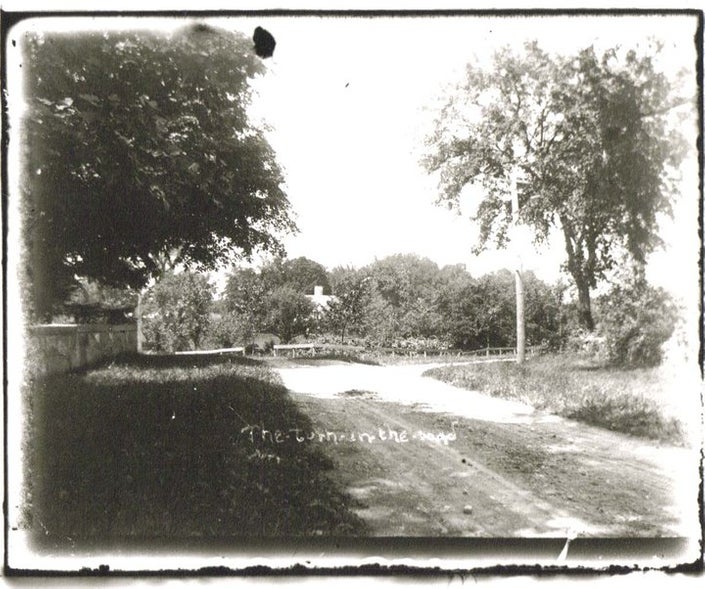
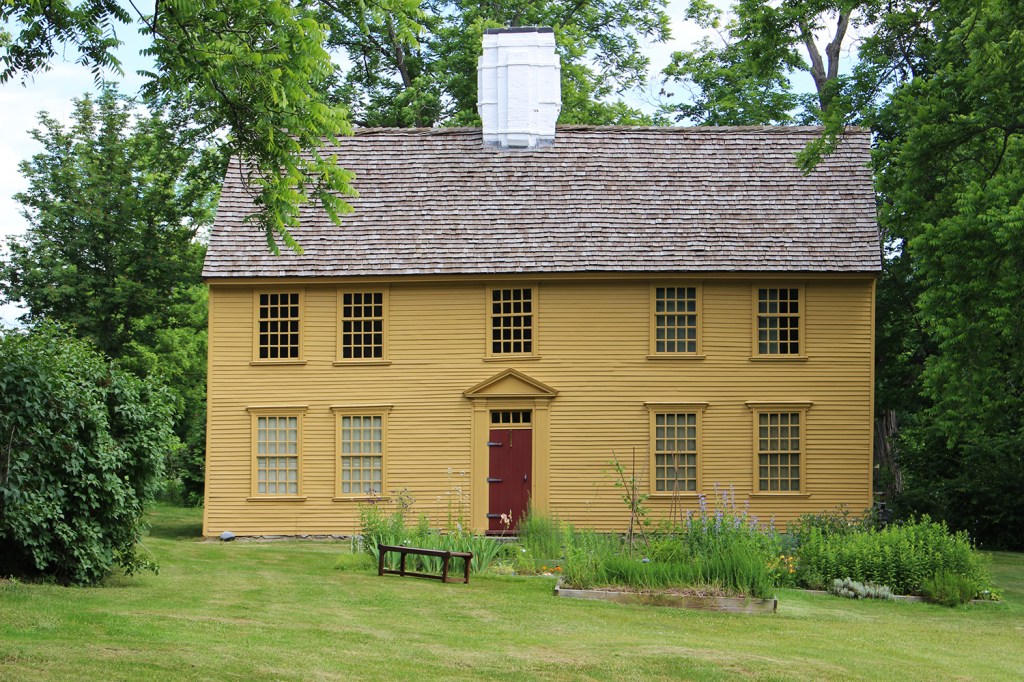
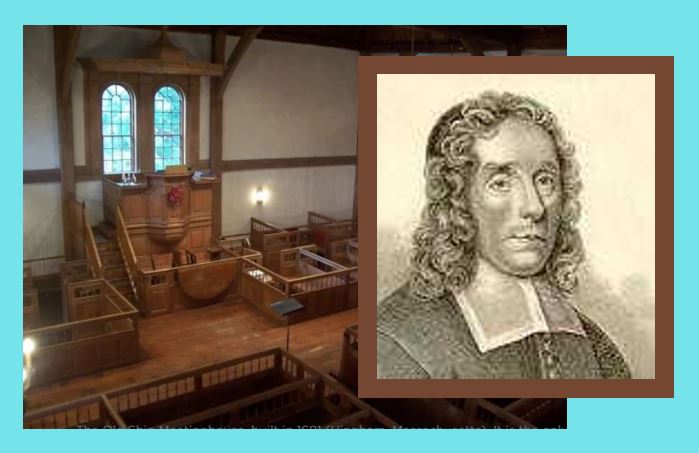
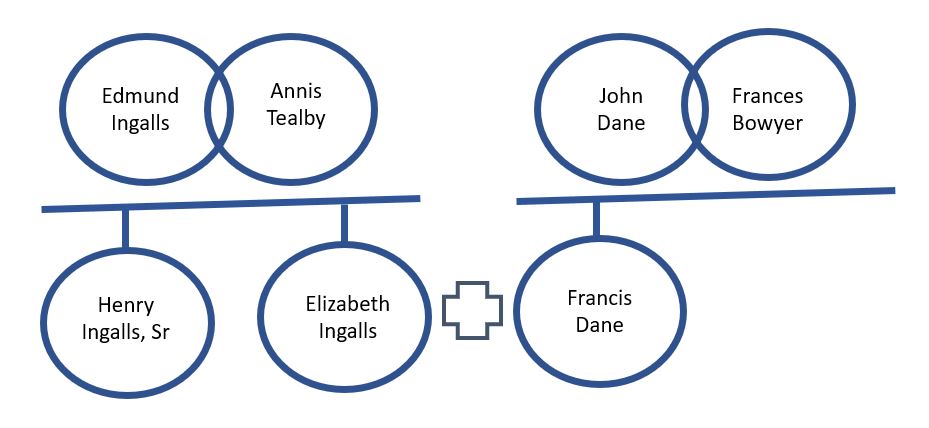
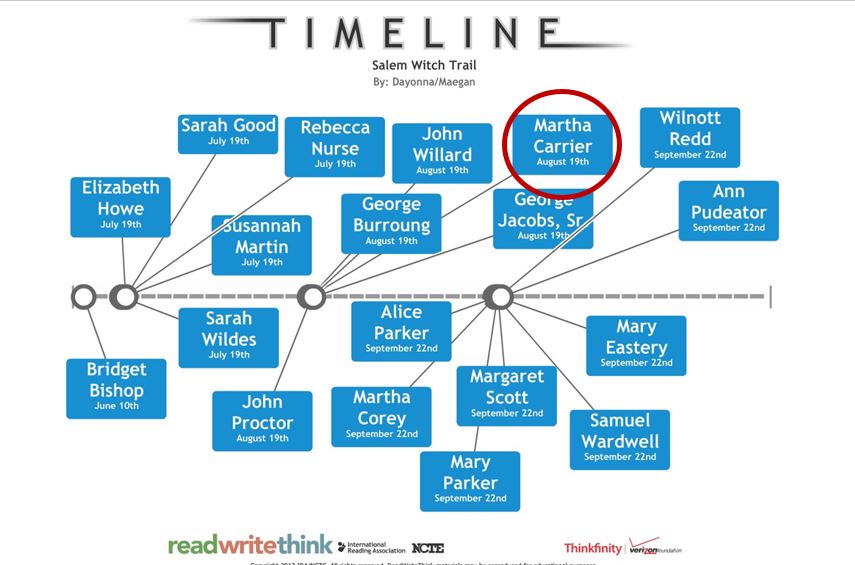
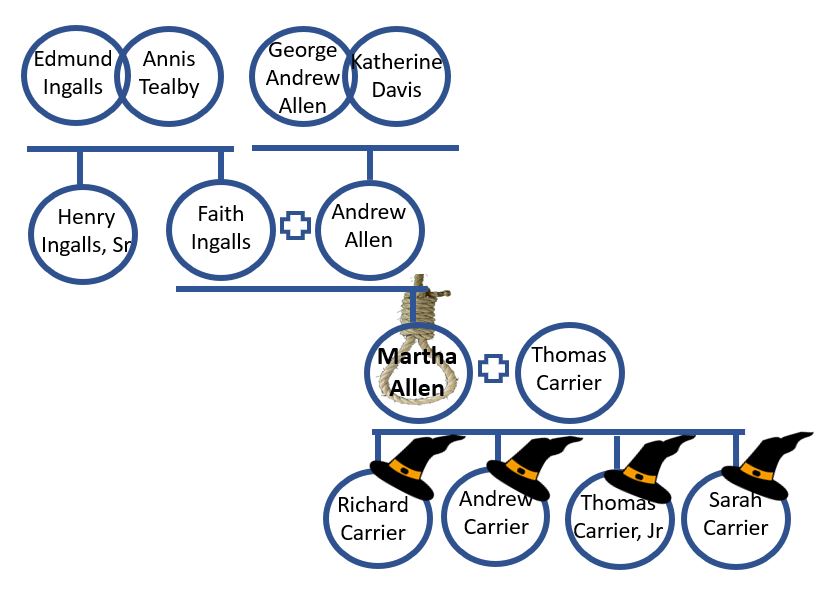
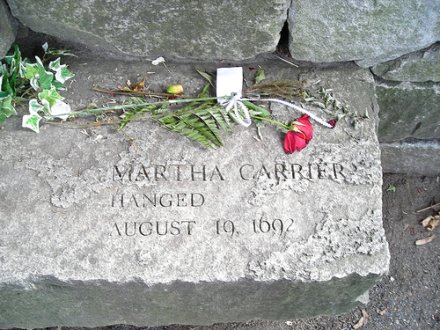


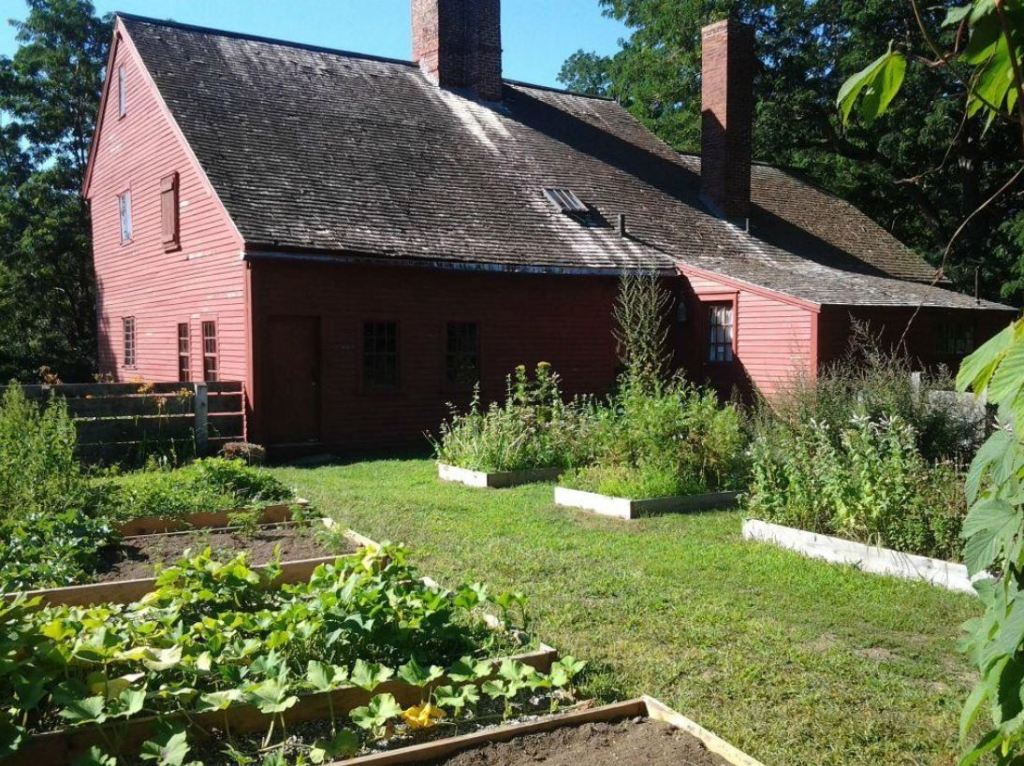

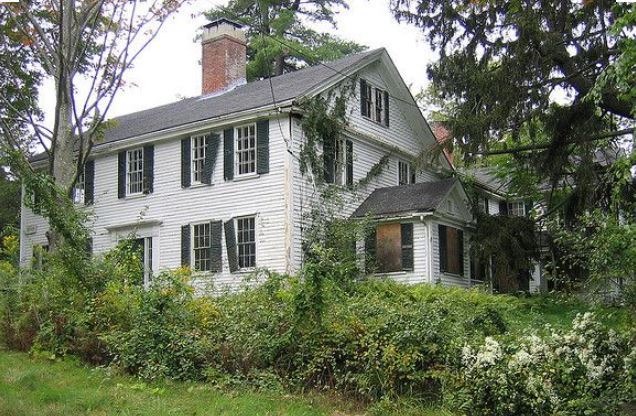
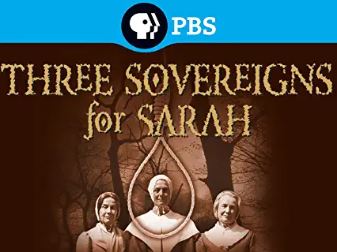
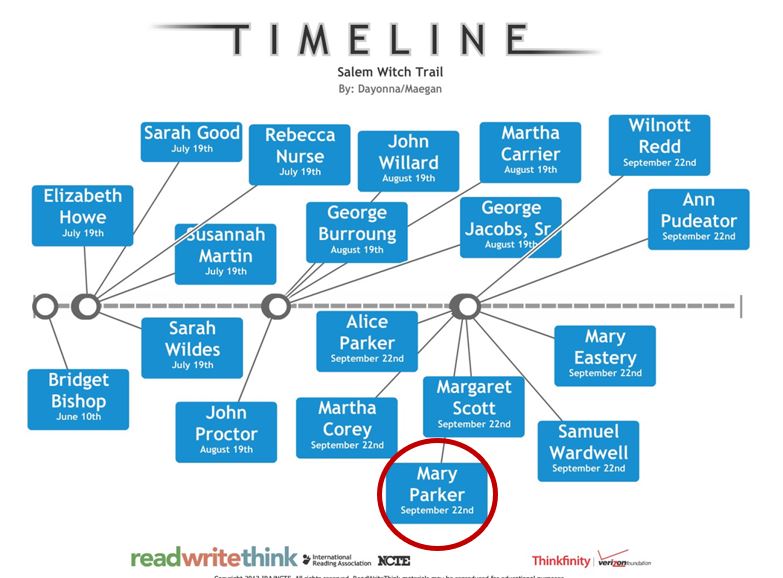
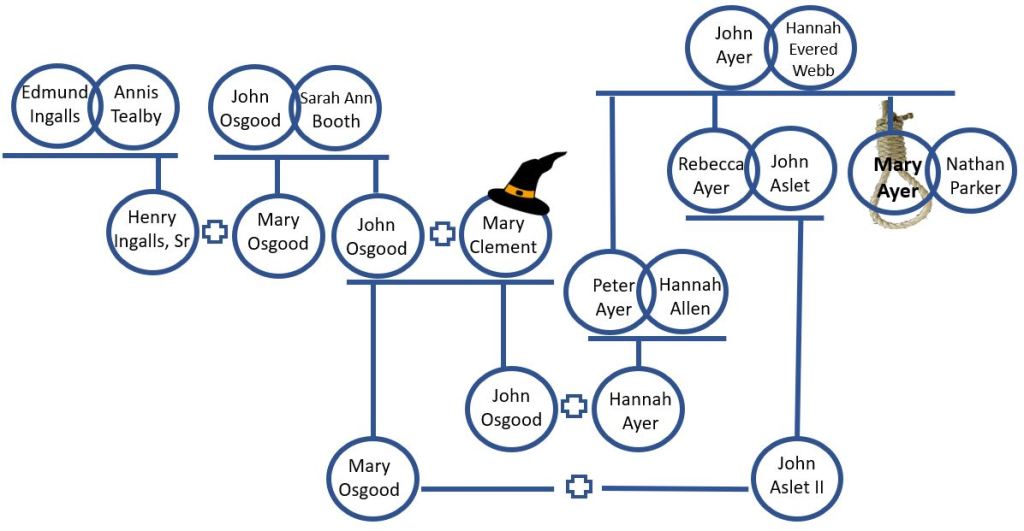
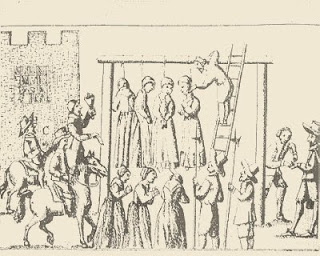
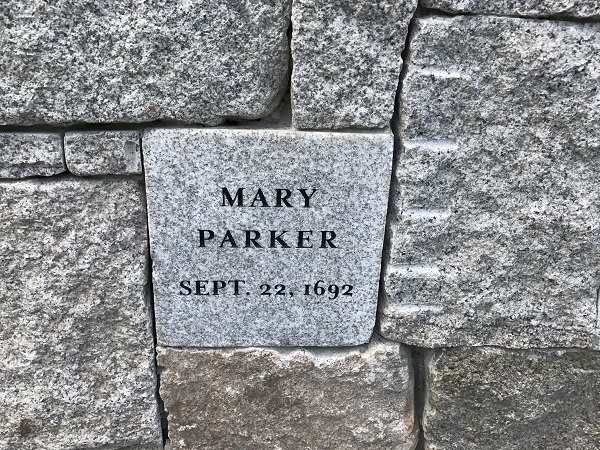

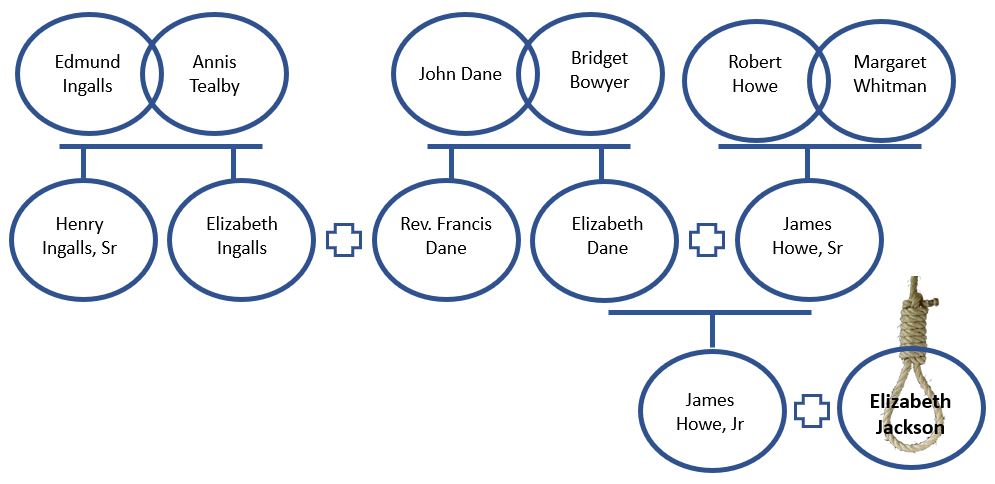
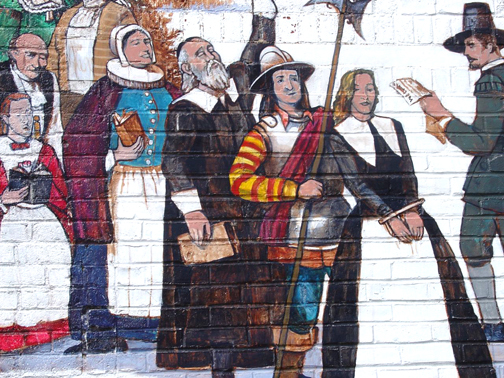


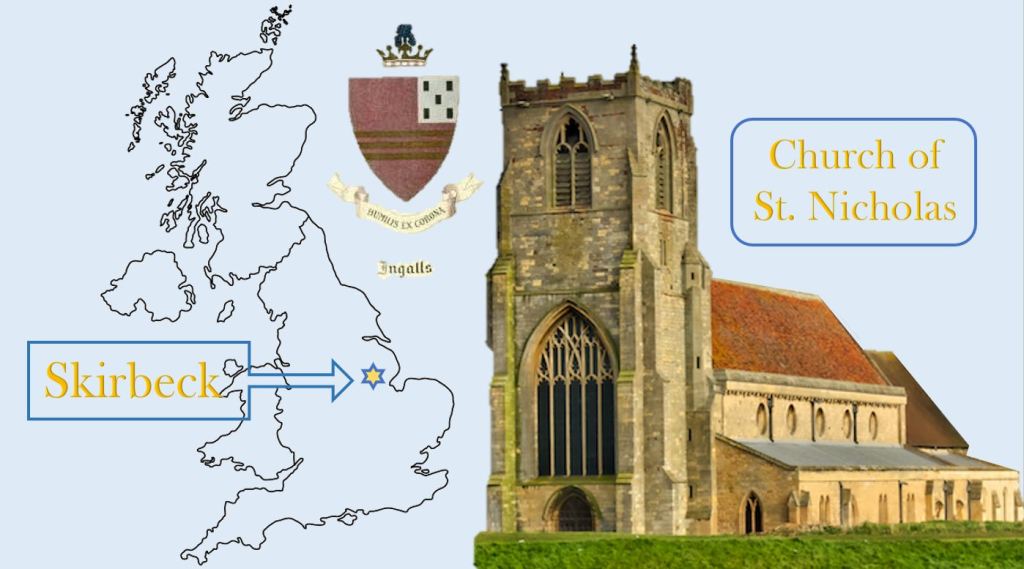
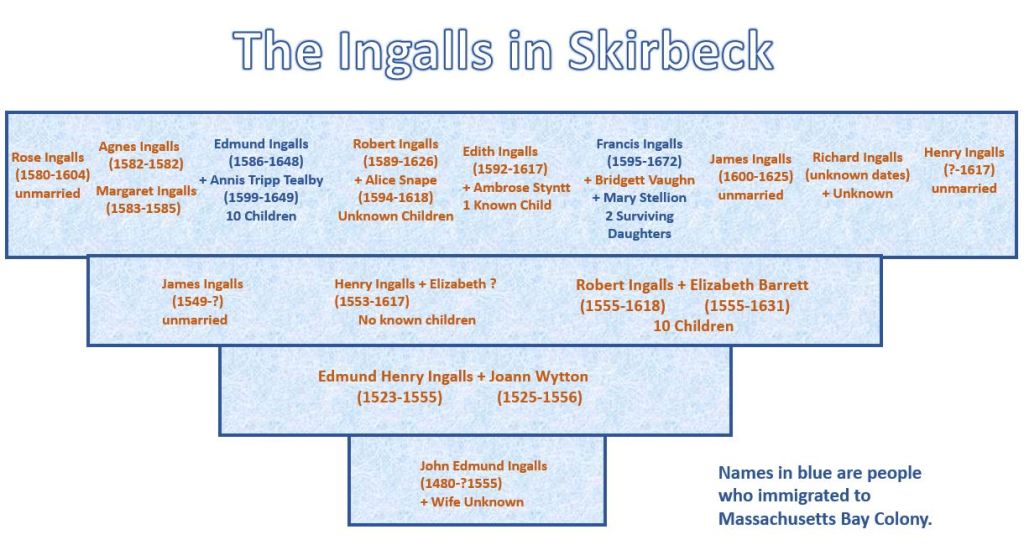


 24 and More